
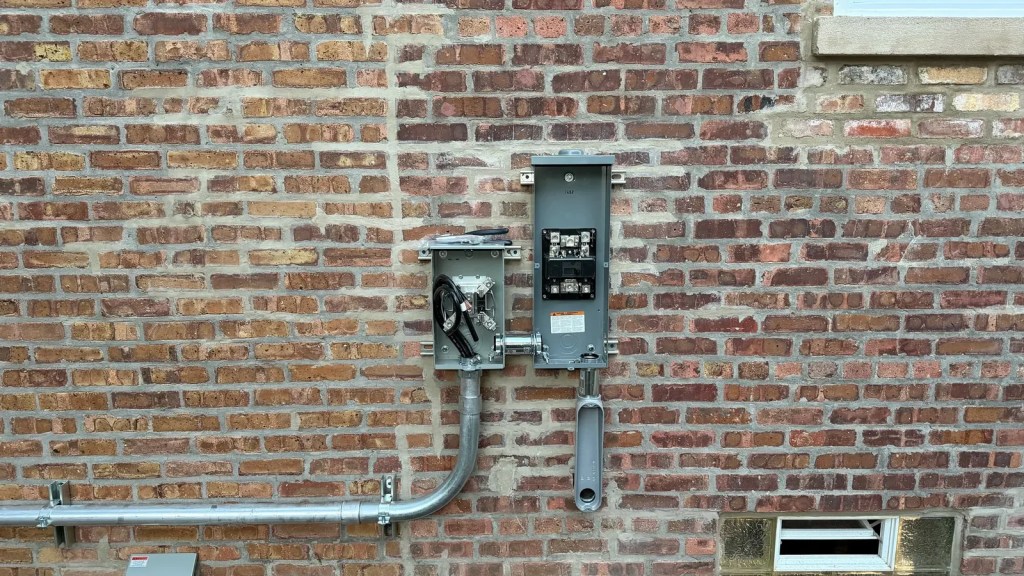
Overhead electrical services
Service work means coordinating with the utility, not just with the customer. Quik Wire Electric handles overhead electrical services across Des Plaines and 24 Illinois counties. Licensed, insured, permitted where it needs to be.
- Licensed
Illinois electrical contractor license. The work passes inspection.
- Insured
Full coverage on every job, residential through municipal.
- 24/7
No power, burning smell, breaker that will not hold. We answer.
- Permits pulled
We pull permits where they apply and stay through the inspection.
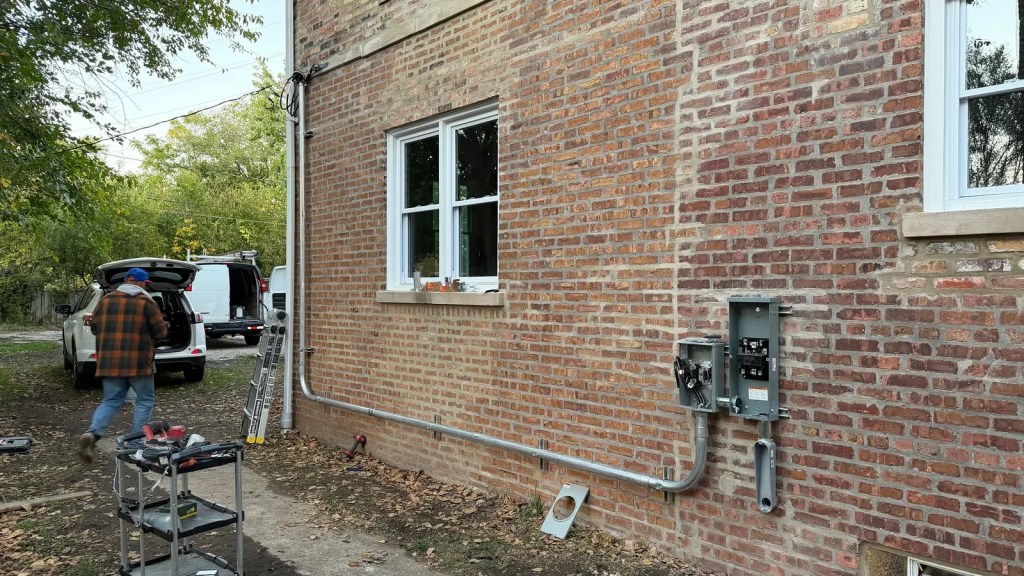
What overhead electrical services involves
Service work means coordinating with the utility, not just with the customer. The work starts with finding out what is actually there. With overhead electrical services, that means looking at the existing wiring, the panel capacity and whatever the last person left behind.
Honest answer first. If what you have is fine, we say it is fine. If it needs work, we tell you how much and why, with the urgent parts separated from the ones that can wait.
Where this comes up
Services, switchgear, transformers and the distribution behind the meter. Most of these calls come from Des Plaines and the surrounding suburbs, but we take them anywhere in our service area.
It comes up most during a remodel. The walls are open, the old wiring is right there, and it is the cheapest moment the building will ever give you to fix what is behind them. Once the drywall is back, the same repair costs more.
How we do it
Quik Wire Electric has 3 years in business and 10 years of electrical experience behind it. The work goes in to code, gets tested and comes with a 100% satisfaction guarantee.
Why this is worth doing properly
Insurance companies and home buyers both ask about electrical work eventually. Unpermitted wiring can complicate a claim or a sale, and a panel full of mismatched breakers can stall a closing. Work that was permitted and inspected, with the paperwork kept, answers those questions on one sheet of paper. That is a lot easier than explaining a mystery circuit years after the fact.
The cost of doing it right the first time is almost always lower than the cost of doing it twice. We would rather tell you the job is bigger than you hoped than come back in two years.
Scheduling and how long it takes
Most scheduled jobs start within a few days. Anything needing a village permit or a utility disconnect waits on those offices, and we will tell you up front how long that usually takes. Emergencies skip the line and get same-day attention.
We will tell you at the quote which parts we control and which parts we do not. A service upgrade waiting on a utility appointment is a different timeline from a panel swap we can do tomorrow.
Code, permits and inspection
Most permitted jobs have two inspections. The rough-in is checked with the walls open, before insulation and drywall. The final happens once devices are in and the power is on. Missing the rough-in means opening finished walls later, so we schedule around it from the start.
We deal with whichever jurisdiction the job sits in. We pull the permit, we schedule the inspection, and we are there when the inspector walks it. You get the paperwork at the end, which matters when you sell the building or when an insurer asks.
Grounding and bonding
Grounding is the part nobody sees and the part that decides whether a fault clears safely. The ground path has to be continuous and low-impedance from every device back to the service, and the neutral and ground can only be bonded together in one place.
A neutral bonded to ground in a subpanel is one of the most common defects we find. It works right up until it does not, and then it puts current on metal that people touch.
When to stop and call
If a breaker trips again right after you reset it, leave it off and call. Same if a faceplate feels warm to the touch or the panel is humming. Resetting a breaker over and over is how a small fault becomes a fire.
Half the house losing power while the other half keeps working usually means one leg of the service has dropped. Sometimes the fault is in the panel, sometimes on the utility side. Either way, stop troubleshooting and call so we can find out which.
Service size is a ceiling on everything
The service is the limit every other circuit lives under. A 100-amp service was generous when houses had one air conditioner and a gas range. Add electric cooking, a heat pump, a car charger and a finished basement and it stops being enough.
Upgrading means coordinating with ComEd, replacing the meter socket and mast, and sizing the new panel for what the building will need in ten years rather than exactly what it needs today.
We tell you what is wrong before we tell you what it costs.
How the job runs
- Step 1
Call
Call and explain the problem to someone who does the work. You get a straight read on urgency right away.
- Step 2
Diagnose
We find the actual fault. Not a guess, and not a rewire you did not need.
- Step 3
Price
You get the number before the work starts, in writing.
- Step 4
Permit
Where the village requires one, we pull it. That is on us, not on you.
- Step 5
Install
Licensed and insured, to code, cleaned up behind us.
- Step 6
Inspect
We meet the inspector and we sign off. You get the documentation.
Other power work
Related services we handle with the same crew.
- Electrical service installationServices, switchgear, transformers and the distribution behind the meter.
- Service electrical service upgradesServices, switchgear, transformers and the distribution behind the meter.
- Electrical service replacementServices, switchgear, transformers and the distribution behind the meter.
- Electrical service repairsServices, switchgear, transformers and the distribution behind the meter.
- Utility service connectionsServices, switchgear, transformers and the distribution behind the meter.
- Electrical meter installationServices, switchgear, transformers and the distribution behind the meter.
- Main disconnectsServices, switchgear, transformers and the distribution behind the meter.
- Main service panelsServices, switchgear, transformers and the distribution behind the meter.
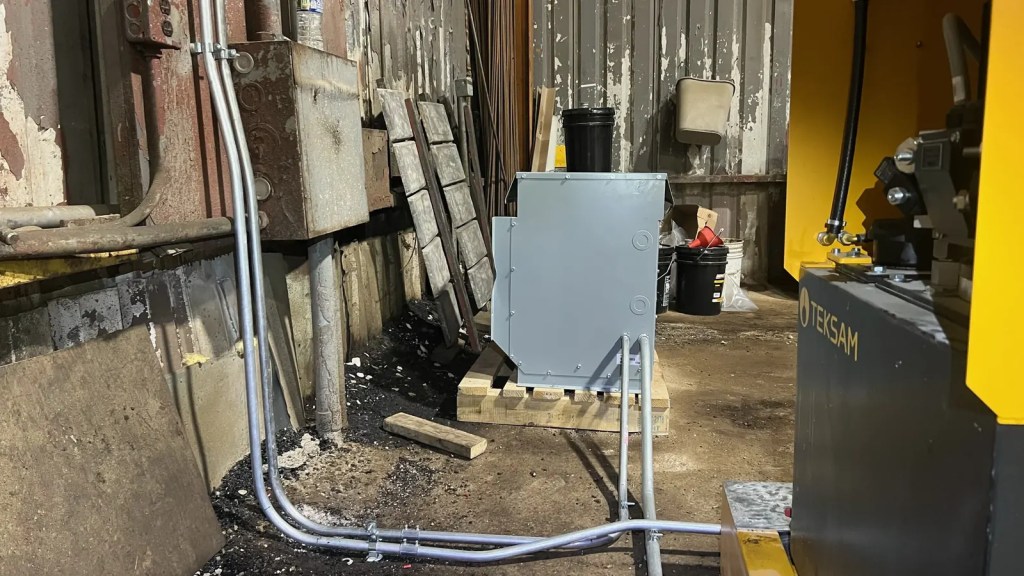
Overhead electrical services, done on the record
Nothing off the books. If the village needs a permit, it gets filed, and the job is not finished until it passes inspection.
Overhead electrical services questions
Do you handle overhead electrical services in Des Plaines?
Yes. Overhead electrical services is work we do regularly out of our Des Plaines shop, and we cover 24 counties across Illinois. Call and we will tell you when we can be there.
Is the work permitted and inspected?
Where the village or city requires a permit, we pull it and we meet the inspector. You get the documentation when the job closes.
How soon can you start?
Call with no power or a burning smell and we come the same day. Other work is usually on the calendar within a few days, depending on the permit and parts.
Are you licensed for this?
It is the first thing you should ask. The answer is yes: Quik Wire Electric holds an Illinois electrical contractor license and carries insurance on every job.
What does it cost?
We do not give a price over the phone for work we have not seen, because a number like that is a guess. Once we have looked, you get a written price, and that is the price unless the job itself changes.
Where we work
We cover 527 municipalities across 24 counties.
- Des Plaines, ILOverhead electrical services in Des Plaines and the rest of Cook County.
- Elgin, ILOverhead electrical services in Elgin and the rest of Kane County.
- Wheeling, ILOverhead electrical services in Wheeling and the rest of Cook County.
Need overhead electrical services?
Call (224) 245-6038. You get an electrician, not a call center.
Want to see the work first? Look through the gallery, or tell us what is happening.