
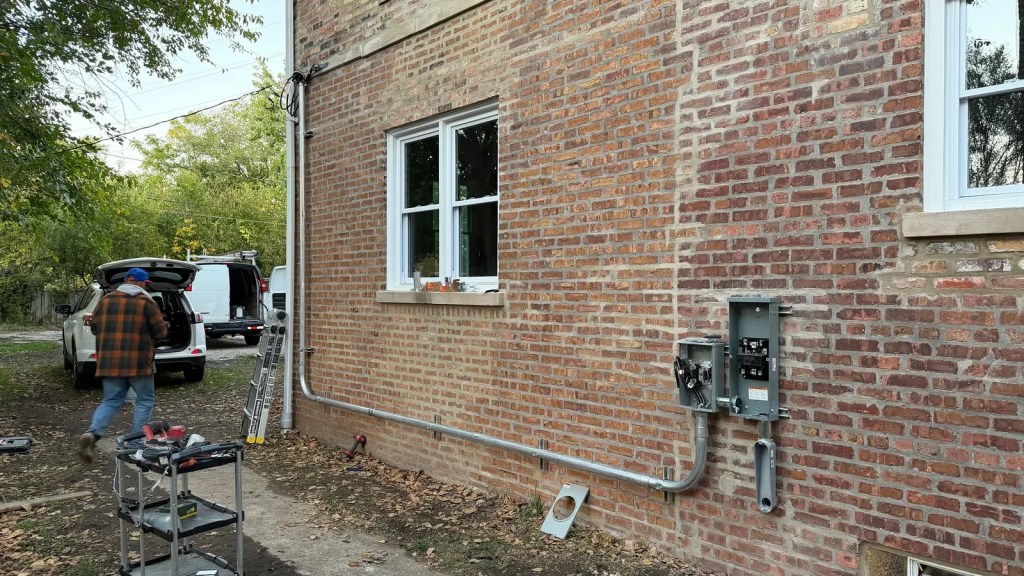
EV charging infrastructure
Underground work is judged years later, when somebody has to find it. Quik Wire Electric handles EV charging infrastructure across Des Plaines and 24 Illinois counties. Licensed, insured, permitted where it needs to be.
- Licensed
Illinois electrical contractor license. The work passes inspection.
- Insured
Full coverage on every job, residential through municipal.
- 24/7
No power, burning smell, breaker that will not hold. We answer.
- Permits pulled
The village gets its permit and you get the inspection record.
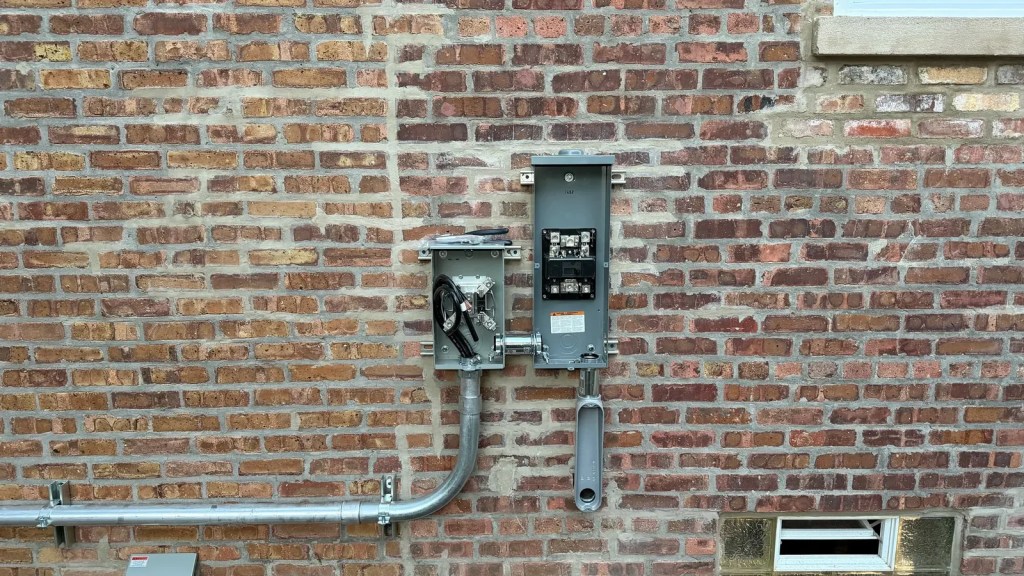
What EV charging infrastructure involves
Underground work is judged years later, when somebody has to find it. The work starts with finding out what is actually there. With EV charging infrastructure, that means looking at the existing wiring, the panel capacity and whatever the last person left behind.
We tell you what we find before we tell you what it costs. If the scope is smaller than you expected, it gets smaller. That happens more often than people assume.
Where this comes up
Street lighting, traffic signals, pump stations and underground distribution. Most of these calls come from Des Plaines and the surrounding suburbs, but we take them anywhere in our service area.
New load on old wiring is the most common version. A heat pump or a charger for the car goes in, the circuits that were fine until then start complaining, and the real question becomes whether the existing service can carry it at all.
How we do it
Licensed and insured on every call. No job is too small to do properly, and no shortcut is worth an inspector’s red tag. We would rather do it once.
Why this is worth doing properly
A bad electrical connection does not fail politely. It heats, it chars the box around it, and eventually starts a fire inside a wall where nobody can see it. That is why the licensing exists and why an inspector looks at the work. Every connection has to be tight, every conductor sized for the load it will actually carry, every box accessible afterwards.
The cost of doing it right the first time is almost always lower than the cost of doing it twice. We would rather tell you the job is bigger than you hoped than come back in two years.
Scheduling and how long it takes
We answer 24/7 and an emergency gets a crew the same day. Planned work typically starts within a few days of the go-ahead, unless a permit or a ComEd appointment has to land first.
A small repair is usually one visit. A service upgrade has several moving parts: our install, the village inspection and ComEd restoring power. We tell you which step you are waiting on at every point, so the date never goes quiet.
Code, permits and inspection
An inspector is checking the things you cannot easily see later: box fill, conductor size, grounding and bonding, clearances at the panel, and whether each circuit has the protection it needs. Passing means a second trained set of eyes agrees the work is safe.
We deal with whichever jurisdiction the job sits in. We pull the permit, we schedule the inspection, and we are there when the inspector walks it. You get the paperwork at the end, which matters when you sell the building or when an insurer asks.
Grounding and bonding
Grounding is the part nobody sees and the part that decides whether a fault clears safely. The ground path has to be continuous and low-impedance from every device back to the service, and the neutral and ground can only be bonded together in one place.
A neutral bonded to ground in a subpanel is one of the most common defects we find. It works right up until it does not, and then it puts current on metal that people touch.
What to do before we arrive
If an outlet or switch is sparking or scorched, leave it alone and turn off its breaker. Do not pull the plug from a device that is visibly burning at the receptacle. Keep people and pets out of that room until we get there.
Keep track of patterns. Does it happen in the morning, in the rain, when the microwave runs? Patterns point us straight at the fault.
We tell you what is wrong before we tell you what it costs.
How the job runs
- Step 1
Call
No call center. The person on the phone knows electrical work and can tell you if it needs someone today.
- Step 2
Diagnose
We find the actual fault. Not a guess, and not a rewire you did not need.
- Step 3
Price
You get the number before the work starts, in writing.
- Step 4
Permit
Where the village requires one, we pull it. That is on us, not on you.
- Step 5
Install
Licensed and insured, to code, cleaned up behind us.
- Step 6
Inspect
We meet the inspector and we sign off. You get the documentation.
Other infrastructure work
Related services we handle with the same crew.
- Municipal street lightingStreet lighting, traffic signals, pump stations and underground distribution.
- Traffic signal electricalStreet lighting, traffic signals, pump stations and underground distribution.
- Traffic signal infrastructureStreet lighting, traffic signals, pump stations and underground distribution.
- Pedestrian crossing signalsStreet lighting, traffic signals, pump stations and underground distribution.
- Municipal parking lot lightingStreet lighting, traffic signals, pump stations and underground distribution.
- Park lightingStreet lighting, traffic signals, pump stations and underground distribution.
- Municipal athletic field lightingStreet lighting, traffic signals, pump stations and underground distribution.
- Municipal parking facilitiesStreet lighting, traffic signals, pump stations and underground distribution.
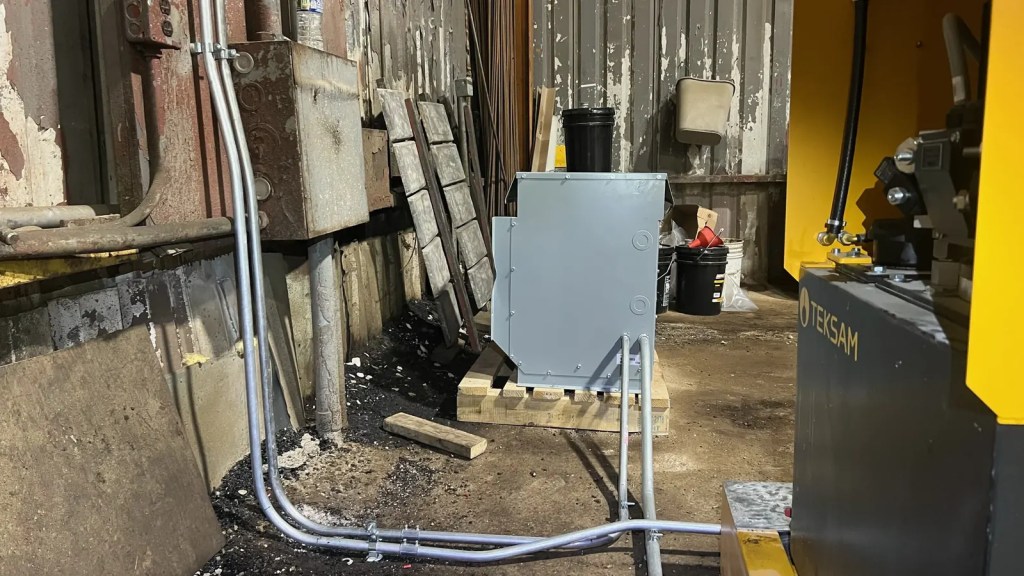
EV charging infrastructure, done on the record
We do it the way it should be done, under our electrical contractor license and our insurance, with the permit and inspection wherever they are required.
EV charging infrastructure questions
Do you handle EV charging infrastructure in Des Plaines?
Yes. EV charging infrastructure is work we do regularly out of our Des Plaines shop, and we cover 24 counties across Illinois. Call and we will tell you when we can be there.
Is the work permitted and inspected?
Where one is required, yes. Some places want a permit for a single circuit, others only for a service change, and we know to check. The inspection record is yours when we finish.
How soon can you start?
Fast. Emergencies are handled the same day, around the clock. Planned jobs typically begin within a few days unless a permit has to clear or a part has to arrive.
Are you licensed for this?
Yes. We carry an Illinois electrical contractor license and insurance, and you are welcome to ask for proof of both before any work starts.
What does it cost?
Tell us what is going on and we can tell you what kind of job it probably is. The firm number comes after we have seen it, written and itemized, and it stays put unless the work changes.
Where we work
We cover 527 municipalities across 24 counties.
- Des Plaines, ILEV charging infrastructure in Des Plaines and the rest of Cook County.
- Niles, ILEV charging infrastructure in Niles and the rest of Cook County.
Need EV charging infrastructure?
Call (224) 245-6038. You get an electrician, not a call center.
Describe the problem and an electrician gets back to you. Curious what our installs look like? See the gallery.