
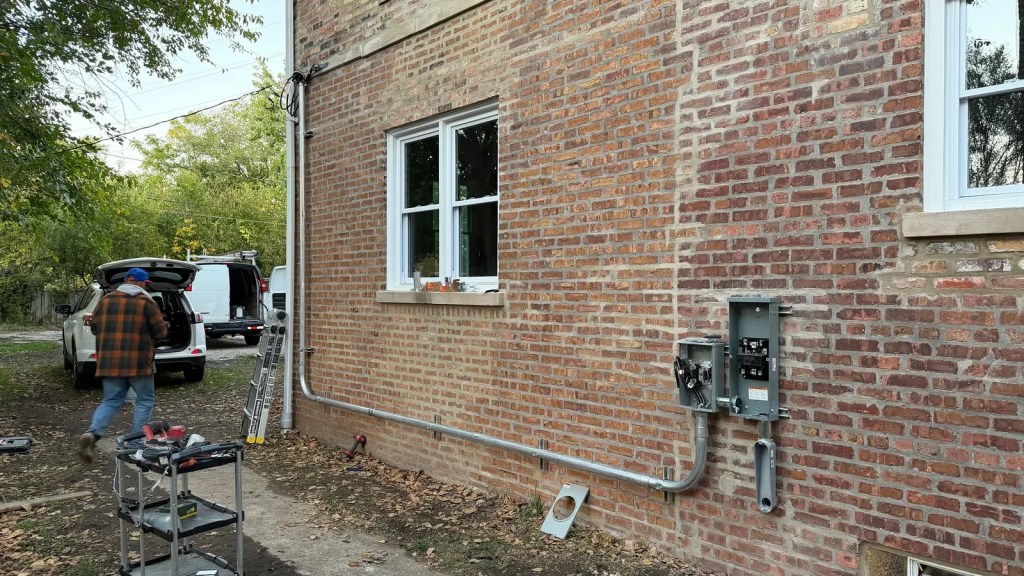
Industrial equipment connections
Three-phase work is its own discipline. Quik Wire Electric handles equipment connections across Des Plaines and 24 Illinois counties. Licensed, insured, permitted where it needs to be.
- Licensed
Illinois electrical contractor license. The work passes inspection.
- Insured
Full coverage on every job, residential through municipal.
- 24/7
No power, burning smell, breaker that will not hold. We answer.
- Permits pulled
Permit paperwork and the inspector’s visit are handled by us, wherever required.

What equipment connections involves
Three-phase work is its own discipline. The work starts with finding out what is actually there. With equipment connections, that means looking at the existing wiring, the panel capacity and whatever the last person left behind.
A diagnosis comes before a scope. Once we know what is happening and why, we lay out the work, and you decide how much of it you want done now.
Where this comes up
Motor controls, machinery wiring, 480V systems and plant distribution. Most of these calls come from Des Plaines and the surrounding suburbs, but we take them anywhere in our service area.
Previous work is the wild card. Plenty of Illinois homes and shops have circuits somebody extended on a weekend, splices buried in a wall with no box, and breakers upsized to stop a nuisance trip. We find those first, because they decide what is safe to build on.
How we do it
Every connection gets tightened properly and every wire is sized for the load it carries. Where the village requires a permit, the inspector signs off on it, so the standard is on paper as well as in the wall.
What changes with an older building
Buildings in this part of Illinois cover about a century of wiring practice. Knob-and-tube in the oldest, cloth-insulated branch circuits after that, aluminum wiring in a stretch of the sixties and seventies, and modern copper since. Each one fails differently and each one has its own repair path.
We look at what is actually in the walls before quoting, because guessing from the year the house was built is how people end up with a surprise halfway through.
Who actually shows up
The same licensed electricians, whether the job is one dead outlet in a bungalow or switchgear in a village facility. We do not run a separate B-team for small work and we do not subcontract the parts nobody wants.
You get the electrician’s name and an arrival window. If we are going to be late, we call ahead. That is the basic courtesy we would expect at our own homes.
Code, permits and inspection
An inspector is checking the things you cannot easily see later: box fill, conductor size, grounding and bonding, clearances at the panel, and whether each circuit has the protection it needs. Passing means a second trained set of eyes agrees the work is safe.
We deal with whichever jurisdiction the job sits in. We pull the permit, we schedule the inspection, and we are there when the inspector walks it. You get the paperwork at the end, which matters when you sell the building or when an insurer asks.
Grounding and bonding
Grounding is the part nobody sees and the part that decides whether a fault clears safely. The ground path has to be continuous and low-impedance from every device back to the service, and the neutral and ground can only be bonded together in one place.
A neutral bonded to ground in a subpanel is one of the most common defects we find. It works right up until it does not, and then it puts current on metal that people touch.
What to do before we arrive
A warm faceplate or a buzzing switch means stop using it. Turn that circuit off at the panel, tape over the switch or outlet so nobody in the house uses it out of habit, and leave the device in place for us to look at.
Note what was running when it happened and whether it has happened before. That usually cuts the diagnostic time in half.
We tell you what is wrong before we tell you what it costs.
How the job runs
- Step 1
Call
An electrician picks up. Describe what you are seeing and we will tell you how urgent it is.
- Step 2
Diagnose
We find the actual fault. Not a guess, and not a rewire you did not need.
- Step 3
Price
You get the number before the work starts, in writing.
- Step 4
Permit
Where the village requires one, we pull it. That is on us, not on you.
- Step 5
Install
Licensed and insured, to code, cleaned up behind us.
- Step 6
Inspect
We meet the inspector and we sign off. You get the documentation.
Other industrial work
Related services we handle with the same crew.
- Industrial electrical contractingMotor controls, machinery wiring, 480V systems and plant distribution.
- Factory electricalMotor controls, machinery wiring, 480V systems and plant distribution.
- Manufacturing electricalMotor controls, machinery wiring, 480V systems and plant distribution.
- Warehouse electricalMotor controls, machinery wiring, 480V systems and plant distribution.
- Distribution center electricalMotor controls, machinery wiring, 480V systems and plant distribution.
- Industrial machinery wiringMotor controls, machinery wiring, 480V systems and plant distribution.
- Industrial motor controlsMotor controls, machinery wiring, 480V systems and plant distribution.
- Motor startersMotor controls, machinery wiring, 480V systems and plant distribution.
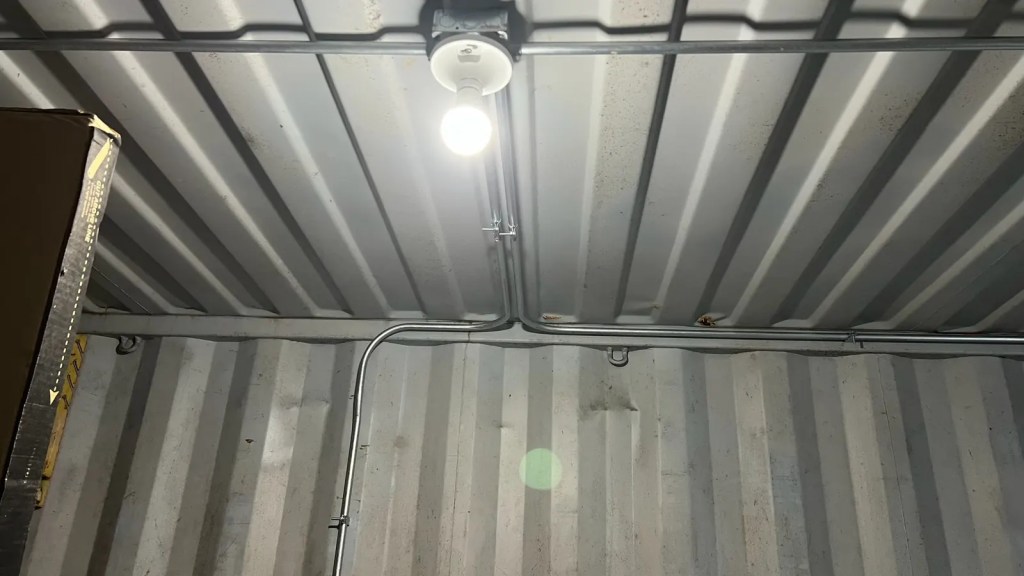
Equipment connections, done on the record
On the record means a licensed electrician, real insurance, a permit when the village calls for one, and an inspector’s sign-off.
Equipment connections questions
Do you handle equipment connections in Des Plaines?
Yes. Equipment connections is work we do regularly out of our Des Plaines shop, and we cover 24 counties across Illinois. Call and we will tell you when we can be there.
Is the work permitted and inspected?
If the municipality requires a permit for it, the work is permitted and inspected. That record matters later, when you sell the building or file an insurance claim.
How soon can you start?
Fast. Emergencies are handled the same day, around the clock. Planned jobs typically begin within a few days unless a permit has to clear or a part has to arrive.
Are you licensed for this?
Yes. We carry an Illinois electrical contractor license and insurance, and you are welcome to ask for proof of both before any work starts.
What does it cost?
It depends on what the job actually needs, which is why we look before we quote. You get a written number before work starts and it does not move unless the scope does.
Where we work
We cover 527 municipalities across 24 counties.
- Des Plaines, ILEquipment connections in Des Plaines and the rest of Cook County.
- Mount Prospect, ILEquipment connections in Mount Prospect and the rest of Cook County.
- Skokie, ILEquipment connections in Skokie and the rest of Cook County.
Need equipment connections?
Call (224) 245-6038. You get an electrician, not a call center.
Before you call, browse finished jobs to see how we leave a panel. Then tell us about yours.