
Belvidere knob-and-tube wiring replacement
Knob-and-tube is the oldest wiring still energized in Belvidere houses, and most of it has been spliced into at least once. We find what is actually there, replace the circuits that have to go, and document the rest instead of guessing at it.
- Licensed
Illinois electrical contractor license. The work passes inspection.
- Insured
Full coverage on every job, residential through municipal.
- 24/7
No power, burning smell, breaker that will not hold. We answer.
- Permits pulled
Filed with the village when required, then inspected and signed off.
What the wire in those walls actually is
Two conductors, a hot and a neutral, run separately rather than side by side. Porcelain knobs hold them off the framing and porcelain tubes carry them through joists and studs. The insulation is rubber under a cloth braid, and there is no ground conductor anywhere in the system. An attic run looks less like cable and more like somebody strung a clothesline between the rafters.
How it gives up
Rubber hardens and cracks with age and heat. The worst spots are where a conductor enters a fixture box or passes near a chimney, because that is where it has cooked the longest, and the braid comes off in flakes leaving bare copper inside the box. That is the real failure. The cloth looking old is not.
The second failure is load. These circuits were sized for lamps. They are now carrying a window unit, a chest freezer and a basement full of receptacles that got spliced on in 1988.
Why a carrier or a closing date usually starts this
Hardly anybody calls because the wiring quit. They call because an insurance carrier asked a question, or an inspector wrote it on a report during a sale. Some carriers will not write a policy with live knob-and-tube in the house, some will write it with conditions attached, and the answer tends to follow the carrier rather than the house.
Working in a house somebody lives in
Nobody is gutting an occupied house to pull wire. The job is getting new cable from the panel to every device while opening as little plaster as possible, which means using the paths the house already has: basement joist bays, the attic, closet corners, the backs of interior partitions. We walk those routes before we quote, because the route is most of the labor and two houses of the same size can be a week apart on it.
What gets opened, and how it gets closed
Expect holes. Fishing a wall means cutting at the top plate or at device height, and a run to a second floor usually means one in a ceiling. We keep them small, keep them in a line, and show you where they are going before anything is cut.
We patch and leave the surface ready for paint rather than painted. If you want it carried further than that, raise it at the quote and we will tell you honestly whether that is us or your drywall guy.
Partial, or the whole house
A partial is the right answer when the old wiring is confined. One attic run feeding two bedroom lights, with everything else already on modern cable, is a short job and there is no reason to call it a rewire.
It stops being the right answer when the old conductors are threaded through every circuit in the building, because a partial there leaves you a map only we can read and another visit coming. We tell you which one you have. Often it is the small one.
The panel end of it
New circuits need somewhere to land, and houses that still have knob-and-tube usually have a panel that was full the day it went in. That is arithmetic, not an upsell: twelve new breakers do not fit into two open spaces.
If the service itself is short for what the house now runs, that is a separate job on the utility's calendar, and we say so up front rather than folding it in quietly.
The missing ground, and the three-prong lie
There is no equipment ground in this system. The practical consequence is that a three-prong receptacle screwed onto two cloth conductors is telling everything you plug into it something untrue, and whoever swapped those devices in did you no favors.
New cable brings the ground with it, so any circuit we replace comes out of this with genuinely grounded receptacles. On circuits still waiting their turn we either put the correct two-prong device back or add ground-fault protection and mark it, which is the straight answer rather than the convenient one.
What is not an emergency
Intact knob-and-tube that is not buried under insulation, not spliced into, not overloaded and not feeding anything heavy is not urgent, and we will tell you so standing in your attic. There are houses in Boone County running original circuits in better shape than a 1990s hack job three streets over.
What moves to the front: visible copper where the braid has gone, old conductors covered by blown-in attic insulation, anything warm to the touch, and any point where old wire meets new without a box around the joint.
The permit, the inspection and the paperwork
A rewire is permitted work. We file it with the city, book the inspection and meet the inspector on site. On a phased job that means more than one inspection, which is worth knowing early because it decides when drywall can close.
A partial rewire you can point to beats a whole-house number somebody quoted from the curb.
Belvidere, IL
Boone County, plus the towns around Belvidere where the housing stock is the same age. The map shows the ground we cover on one trip.
Boone County
7 municipalities covered.
All of Boone CountyEverything else in Belvidere
The work either side of knob-and-tube wiring replacement: panels, lighting, generators, and the calls that cannot wait.
Belvidere electricians
How we run knob-and-tube wiring replacement at a Belvidere address
- Step 1
Survey
We get into the attic, the basement and the panel and find out how much of the old system is still live and where it runs.
- Step 2
Trace
Every old conductor gets followed to both ends. That is what separates a confined run from wiring threaded through the whole house.
- Step 3
Quote
The number comes in writing before anything opens up, with partial and whole-house scopes listed separately so the choice is yours.
- Step 4
Route
We plan the cable paths before cutting, so the holes are where we said they would be and there are as few as the house allows.
- Step 5
Rewire
New grounded cable, proper boxes at every joint, old conductors pulled or cut dead rather than left energized behind plaster.
- Step 6
Close
Holes patched to paint-ready, inspection passed, and a written record of which circuits were replaced and which were not.
Old wiring found, not assumed
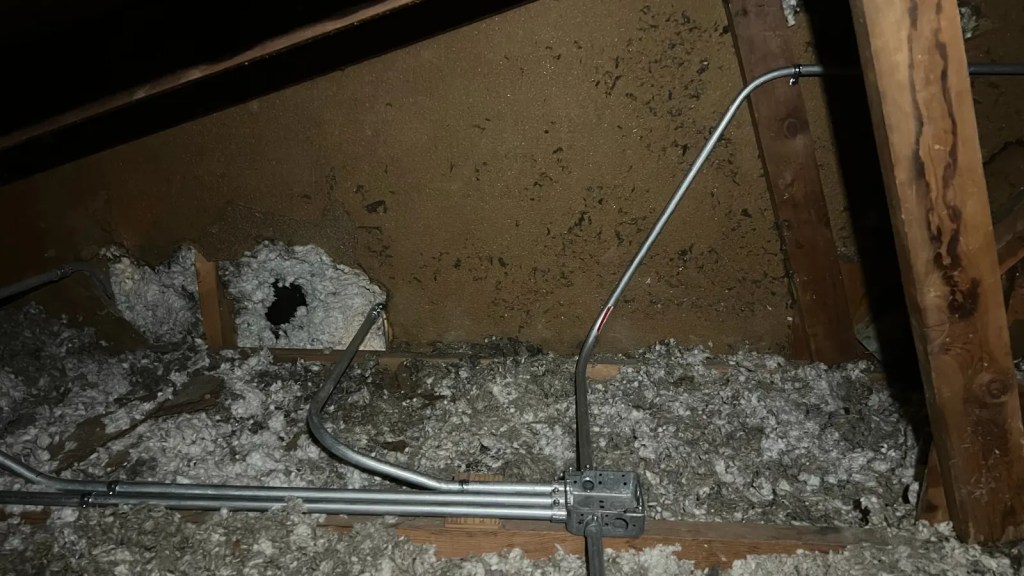
Nobody can tell you what is behind your plaster from the year the house was built. We open the attic, the basement and the panel, follow the old conductors to both ends, and quote the rewire that matches what is actually up there.
Knob-and-tube wiring replacement in Belvidere: questions we get
Is knob-and-tube wiring in a Belvidere house unsafe on its own?
Not automatically. Original runs that were installed properly, are not buried in insulation, have not been spliced into and are not carrying heavy load can be in sound condition. What makes it dangerous is damaged insulation, added load, and the splices somebody made during a remodel. We tell you which of those you have before we quote anything.
Do I have to rewire the whole house?
Only if the old conductors are threaded through most of the circuits. Where the knob-and-tube is confined to a few runs, replacing those runs is the honest job and we price it that way. We walk both ends of every old circuit before deciding, because the answer is different in almost every house.
How much of my plaster gets opened up?
Less than people expect, because we use the paths the house already gives us: basement joist bays, the attic, closet corners and interior partitions. There will still be holes at top plates and at device height, and usually one in a ceiling for a run to an upper floor. We show you where they are going before anything is cut, and we patch to paint-ready.
Will the new wiring give me grounded outlets?
Yes. New cable carries an equipment ground, so every circuit we replace ends in a real grounded receptacle. On circuits that are staying for now we either reinstall the correct two-prong device or add ground-fault protection and label it, rather than leaving a three-prong outlet with nothing behind the third pin.
Does a rewire need a permit in Belvidere?
Yes, and we file it. We schedule the inspection and meet the inspector on site, and on a phased job that means an inspection per phase before drywall closes. The paperwork is yours when the job finishes, which is what an insurance carrier or a buyer's inspector will ask for.
The rest of what we do in Belvidere
Same crew, same license, same Belvidere addresses.
- Residential electrical panel upgradesA rewire adds circuits, and a full bus is what stops it part way through.
- Circuit breaker replacementOld branch circuits are what that breaker is protecting, and often why it opens.
- GFCI installationOn circuits staying on cloth wiring for now, this is the protection that goes in.
- Residential EV charger installationOld wiring decides whether the house can carry a charger at all.
- Knob-and-tube wiring replacement everywhere we workThe same knob-and-tube wiring replacement across Des Plaines and 24 Illinois counties.
Knob-and-tube in your Belvidere attic?
Call (224) 245-6038 and we will tell you whether it is urgent or simply old.
Want to see knob-and-tube wiring replacement we have already done? Start with the gallery, or describe what you have at the Belvidere address.