
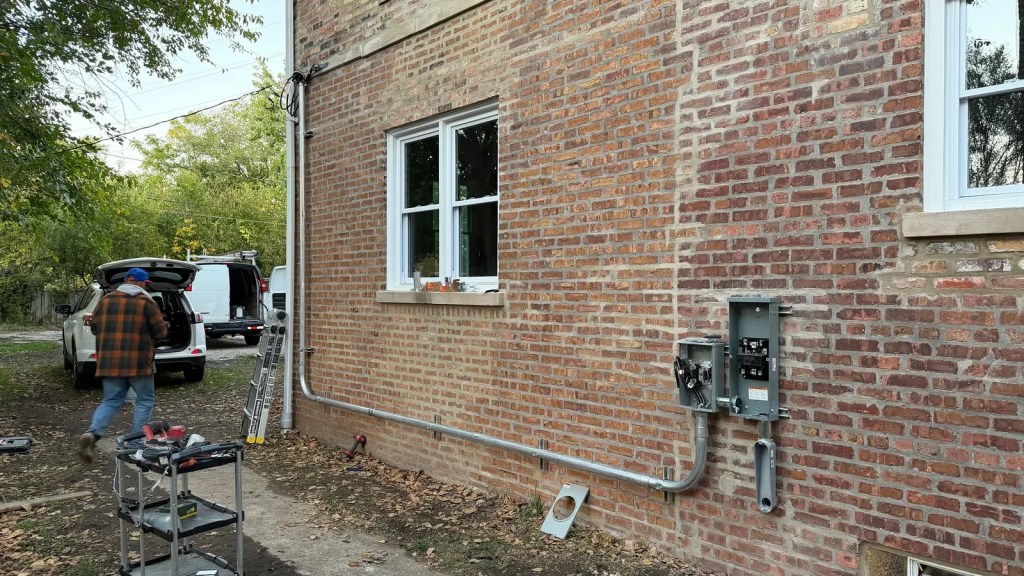
Commercial generators
The transfer switch is the part that decides whether backup power actually works. Quik Wire Electric handles commercial generators across Des Plaines and 24 Illinois counties. Licensed, insured, permitted where it needs to be.
- Licensed
Illinois electrical contractor license. The work passes inspection.
- Insured
Full coverage on every job, residential through municipal.
- 24/7
No power, burning smell, breaker that will not hold. We answer.
- Permits pulled
We handle the permit and the inspection whenever the village calls for them.
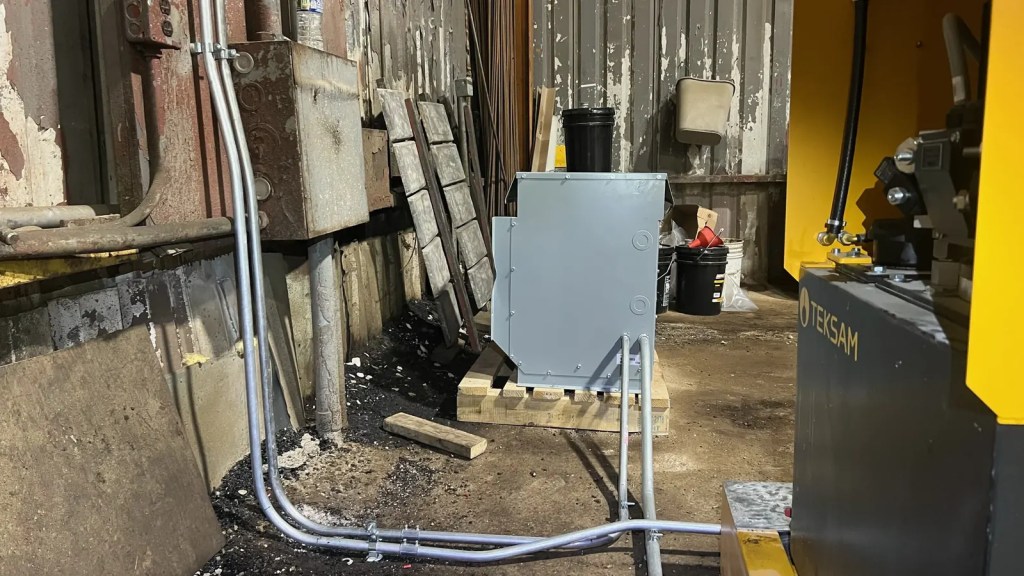
What commercial generators involves
The transfer switch is the part that decides whether backup power actually works. The work starts with finding out what is actually there. With commercial generators, that means looking at the existing wiring, the panel capacity and whatever the last person left behind.
Plenty of calls end with a smaller bill than people braced for. A tripping breaker is often a single bad device, and a dead outlet is often a loose wire two boxes away.
Where this comes up
Standby generators, automatic transfer switches and emergency power systems. Most of these calls come from Des Plaines and the surrounding suburbs, but we take them anywhere in our service area.
Older Illinois buildings rarely match the drawings, if there are drawings at all. Circuits wander between floors, junction boxes hide above ceilings, and a single breaker might feed a bedroom and half the kitchen. Tracing it properly is the first hour of a lot of jobs.
How we do it
Quik Wire Electric has 3 years in business and 10 years of electrical experience behind it. The work goes in to code, gets tested and comes with a 100% satisfaction guarantee.
What changes with an older building
Buildings in this part of Illinois cover about a century of wiring practice. Knob-and-tube in the oldest, cloth-insulated branch circuits after that, aluminum wiring in a stretch of the sixties and seventies, and modern copper since. Each one fails differently and each one has its own repair path.
We look at what is actually in the walls before quoting, because guessing from the year the house was built is how people end up with a surprise halfway through.
Who actually shows up
The person who shows up is a licensed electrician who works for us. No subcontracted crew you have never heard of. Small jobs get the same people as large ones, start to finish.
No guessing who is at your door. We tell you which electrician is coming and about when, and if that changes, you hear it from us before the window passes.
Code, permits and inspection
Most permitted jobs have two inspections. The rough-in is checked with the walls open, before insulation and drywall. The final happens once devices are in and the power is on. Missing the rough-in means opening finished walls later, so we schedule around it from the start.
We deal with whichever jurisdiction the job sits in. We pull the permit, we schedule the inspection, and we are there when the inspector walks it. You get the paperwork at the end, which matters when you sell the building or when an insurer asks.
Grounding and bonding
Grounding is the part nobody sees and the part that decides whether a fault clears safely. The ground path has to be continuous and low-impedance from every device back to the service, and the neutral and ground can only be bonded together in one place.
A neutral bonded to ground in a subpanel is one of the most common defects we find. It works right up until it does not, and then it puts current on metal that people touch.
What to do before we arrive
If water is anywhere near the panel or an outlet, do not touch either one. Stay out of the wet area, keep everyone back, and call us. A flooded basement with live circuits is a job for us, not for a pair of rubber boots.
Do not try to open the panel or take a device apart. Just tell us what you noticed and when, and we will take it from there.
The transfer switch is the system
People buy a generator and think of the engine as the product. The part that decides whether backup power actually works is the transfer switch, because it is what keeps generator power from backfeeding onto the utility line where it can kill a lineman.
Automatic switches sense the outage and start the unit without anybody being home. Manual switches cost less and need somebody present. Which one is right depends on what you are protecting.
We tell you what is wrong before we tell you what it costs.
How the job runs
- Step 1
Call
You talk to an electrician. Tell us what is happening and we tell you whether it is urgent.
- Step 2
Diagnose
We find the actual fault. Not a guess, and not a rewire you did not need.
- Step 3
Price
You get the number before the work starts, in writing.
- Step 4
Permit
Where the village requires one, we pull it. That is on us, not on you.
- Step 5
Install
Licensed and insured, to code, cleaned up behind us.
- Step 6
Inspect
We meet the inspector and we sign off. You get the documentation.
Other generators work
Related services we handle with the same crew.
- Standby generatorsStandby generators, automatic transfer switches and emergency power systems.
- Residential generatorsStandby generators, automatic transfer switches and emergency power systems.
- Government generator systemsStandby generators, automatic transfer switches and emergency power systems.
- Municipal generatorsStandby generators, automatic transfer switches and emergency power systems.
- Emergency generatorsStandby generators, automatic transfer switches and emergency power systems.
- Generator installationStandby generators, automatic transfer switches and emergency power systems.
- Generator wiringStandby generators, automatic transfer switches and emergency power systems.
- Generator maintenanceStandby generators, automatic transfer switches and emergency power systems.
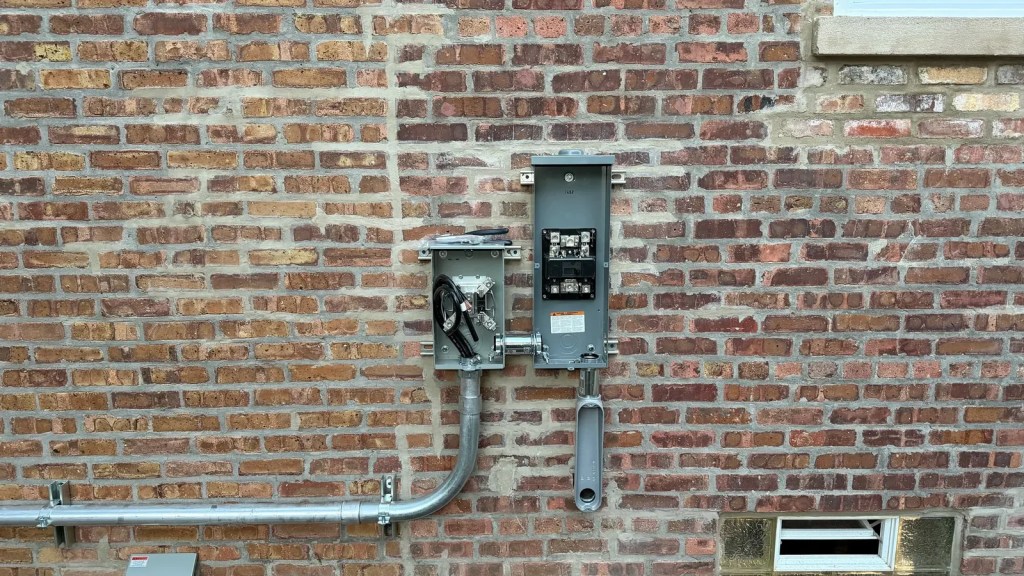
Commercial generators, done on the record
Every job goes on the record. A permit filed where the village asks for one, an inspection passed, and a licensed, insured electrician doing the work.
Commercial generators questions
Do you handle commercial generators in Des Plaines?
Yes. Commercial generators is work we do regularly out of our Des Plaines shop, and we cover 24 counties across Illinois. Call and we will tell you when we can be there.
Is the work permitted and inspected?
Yes. We pull the permit under our license, meet the inspector on site and hand you the closed-out documentation when the job is done.
How soon can you start?
Sooner than most people expect. A safety issue gets someone out the same day. Planned work typically starts in a few days, depending on parts and any permit.
Are you licensed for this?
Yes. Quik Wire Electric holds an Illinois electrical contractor license and carries insurance. Every electrician on the job works under that license.
What does it cost?
Every job gets priced on its own. A dead outlet, a new 240V circuit and a service upgrade have very little in common on the bill. We look at yours, write down the price, and hold to it unless the scope moves.
Where we work
We cover 527 municipalities across 24 counties.
- Des Plaines, ILCommercial generators in Des Plaines and the rest of Cook County.
- Northbrook, ILCommercial generators in Northbrook and the rest of Cook County.
Need commercial generators?
Call (224) 245-6038. You get an electrician, not a call center.
Want to see the work first? Look through the gallery, or tell us what is happening.