
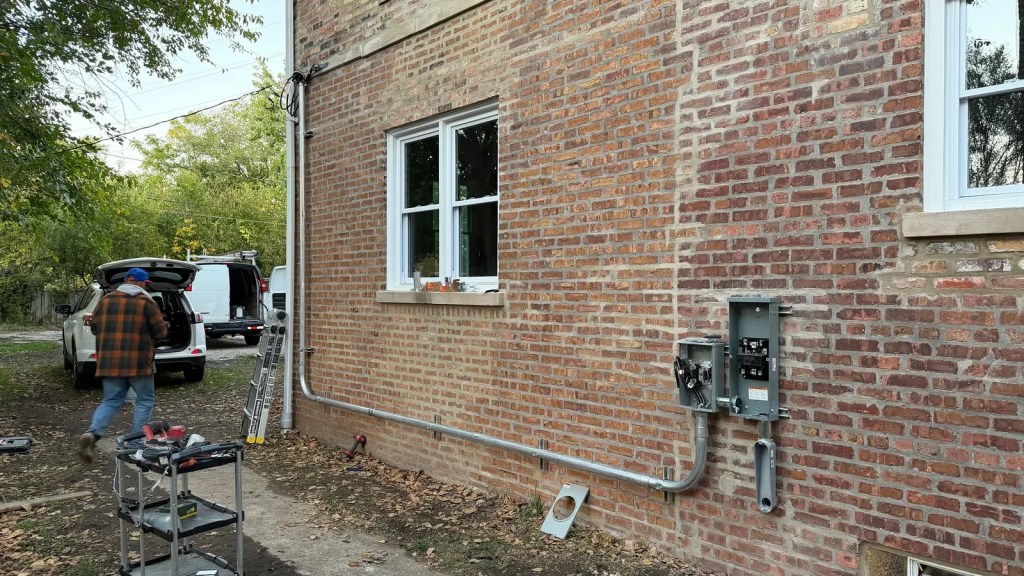
Utility service connections
Service work means coordinating with the utility, not just with the customer. Quik Wire Electric handles utility service connections across Des Plaines and 24 Illinois counties. Licensed, insured, permitted where it needs to be.
- Licensed
Illinois electrical contractor license. The work passes inspection.
- Insured
Full coverage on every job, residential through municipal.
- 24/7
No power, burning smell, breaker that will not hold. We answer.
- Permits pulled
Permitted work stays on the record, from filing through the final inspection.
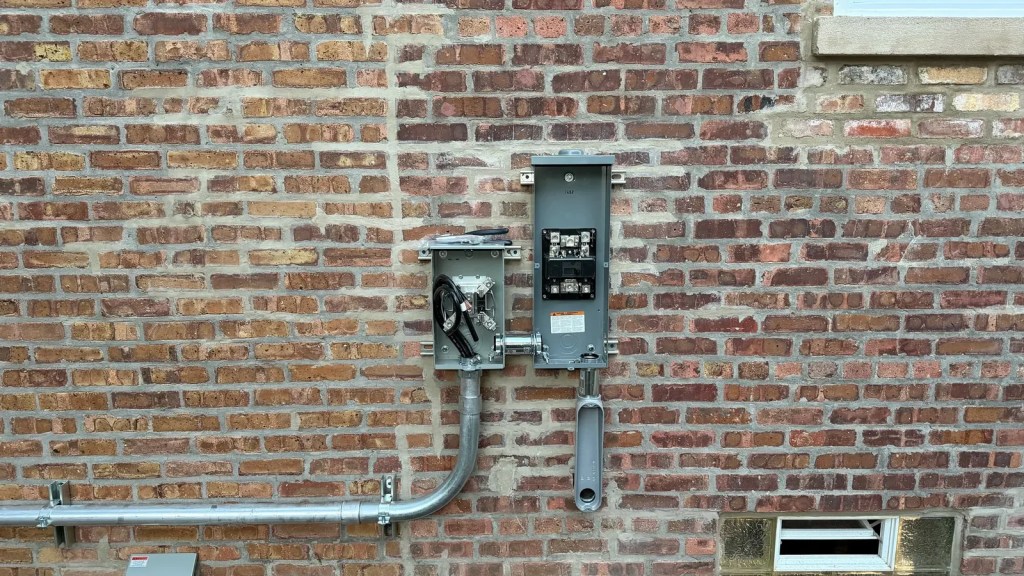
What utility service connections involves
Service work means coordinating with the utility, not just with the customer. The work starts with finding out what is actually there. With utility service connections, that means looking at the existing wiring, the panel capacity and whatever the last person left behind.
We tell you what we find before we tell you what it costs. If the scope is smaller than you expected, it gets smaller. That happens more often than people assume.
Where this comes up
Services, switchgear, transformers and the distribution behind the meter. Most of these calls come from Des Plaines and the surrounding suburbs, but we take them anywhere in our service area.
A home sale is often when this surfaces. An inspector flags aluminum branch wiring, a fuse box or a panel with doubled-up breakers, and suddenly there is a deadline. We can tell you which items are urgent and which are only noted.
How we do it
Every connection gets tightened properly and every wire is sized for the load it carries. Where the village requires a permit, the inspector signs off on it, so the standard is on paper as well as in the wall.
Why this is worth doing properly
A bad electrical connection does not fail politely. It heats, it chars the box around it, and eventually starts a fire inside a wall where nobody can see it. That is why the licensing exists and why an inspector looks at the work. Every connection has to be tight, every conductor sized for the load it will actually carry, every box accessible afterwards.
The cost of doing it right the first time is almost always lower than the cost of doing it twice. We would rather tell you the job is bigger than you hoped than come back in two years.
Scheduling and how long it takes
The electrician you talk to on the phone decides how urgent it is. If it is unsafe, we come the same day. If it can wait, we book it within a few days at a time that works for you.
A job that looks simple can stretch once a wall is open. If we find something that adds a day, you hear about it that afternoon, along with the reason and what it changes about the finish date.
What the permit actually buys you
A permit puts the work on the public record for the address. When the building changes hands, that record is evidence the electrical was done and checked. Without it, a buyer's inspector treats everything they find as suspect.
It also means the work was sized and installed to the code edition in force, not to whatever was normal when the building went up.
Copper, aluminum and what is in your walls
Aluminum branch wiring went into a lot of houses in the late sixties and early seventies. It is not automatically dangerous, but it expands and contracts more than copper, which loosens terminations over time, and it needs devices and connectors rated for it.
The repair is usually not a full rewire. Proper connectors at every termination, done thoroughly, solves most of it. Anybody quoting you a whole-house rewire on sight has not looked.
The warning signs people ignore
Sparks get noticed. The warnings that get missed are subtler: lights that brighten when something else turns on, a GFCI that will not reset after rain, a smell you cannot place that seems to come from a wall. Each one is a problem that is still small.
A faint smell that comes and goes is worth a call. Overheating insulation gives off that smell well before anything is visibly scorched.
Service size is a ceiling on everything
The service is the limit every other circuit lives under. A 100-amp service was generous when houses had one air conditioner and a gas range. Add electric cooking, a heat pump, a car charger and a finished basement and it stops being enough.
Upgrading means coordinating with ComEd, replacing the meter socket and mast, and sizing the new panel for what the building will need in ten years rather than exactly what it needs today.
We tell you what is wrong before we tell you what it costs.
How the job runs
- Step 1
Call
Start with a phone call. An electrician hears the details and tells you if it is an emergency or something to schedule.
- Step 2
Diagnose
We find the actual fault. Not a guess, and not a rewire you did not need.
- Step 3
Price
You get the number before the work starts, in writing.
- Step 4
Permit
Where the village requires one, we pull it. That is on us, not on you.
- Step 5
Install
Licensed and insured, to code, cleaned up behind us.
- Step 6
Inspect
We meet the inspector and we sign off. You get the documentation.
Other power work
Related services we handle with the same crew.
- Electrical service installationServices, switchgear, transformers and the distribution behind the meter.
- Service electrical service upgradesServices, switchgear, transformers and the distribution behind the meter.
- Electrical service replacementServices, switchgear, transformers and the distribution behind the meter.
- Electrical service repairsServices, switchgear, transformers and the distribution behind the meter.
- Electrical meter installationServices, switchgear, transformers and the distribution behind the meter.
- Main disconnectsServices, switchgear, transformers and the distribution behind the meter.
- Main service panelsServices, switchgear, transformers and the distribution behind the meter.
- SwitchboardsServices, switchgear, transformers and the distribution behind the meter.
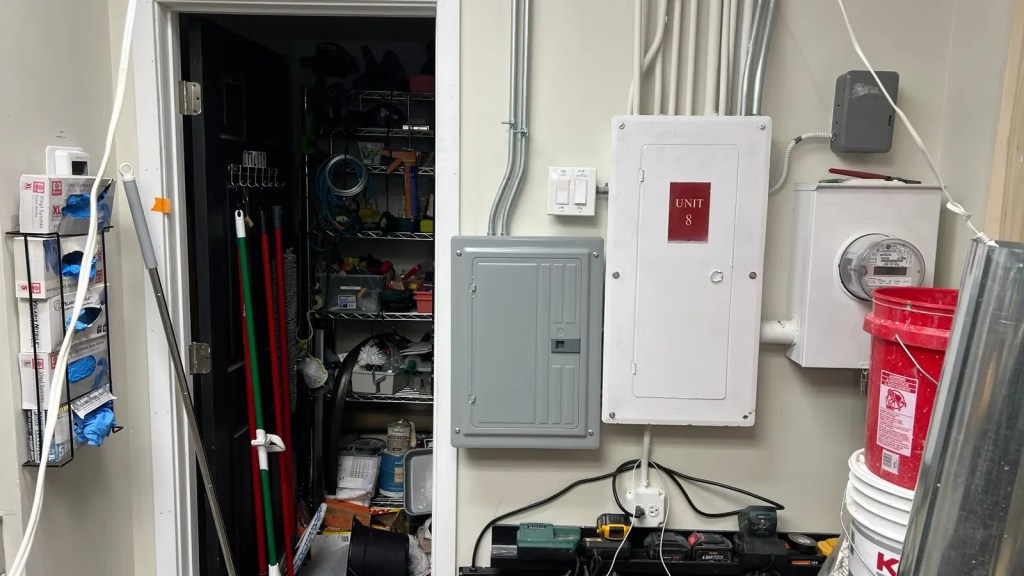
Utility service connections, done on the record
Licensed and insured on every call. Where a permit applies it is filed, and the inspection closes the job.
Utility service connections questions
Do you handle utility service connections in Des Plaines?
Yes. Utility service connections is work we do regularly out of our Des Plaines shop, and we cover 24 counties across Illinois. Call and we will tell you when we can be there.
Is the work permitted and inspected?
Yes. Skipping a required permit saves nobody anything once a buyer or an insurer asks for it. We file it, meet the inspector and give you the records.
How soon can you start?
If it is an emergency, today. Planned work usually starts within a few days, sooner when no permit is needed and the parts are on hand.
Are you licensed for this?
Yes. You are hiring a licensed Illinois electrical contractor with insurance in place, so if something goes wrong, there is a company accountable for it.
What does it cost?
It depends on what the job actually needs, which is why we look before we quote. You get a written number before work starts and it does not move unless the scope does.
Where we work
We cover 527 municipalities across 24 counties.
- Des Plaines, ILUtility service connections in Des Plaines and the rest of Cook County.
- Mount Prospect, ILUtility service connections in Mount Prospect and the rest of Cook County.
- Palatine, ILUtility service connections in Palatine and the rest of Cook County.
Need utility service connections?
Call (224) 245-6038. You get an electrician, not a call center.
Photos of finished panels and service work are in the gallery. When you are ready, send us the details.