
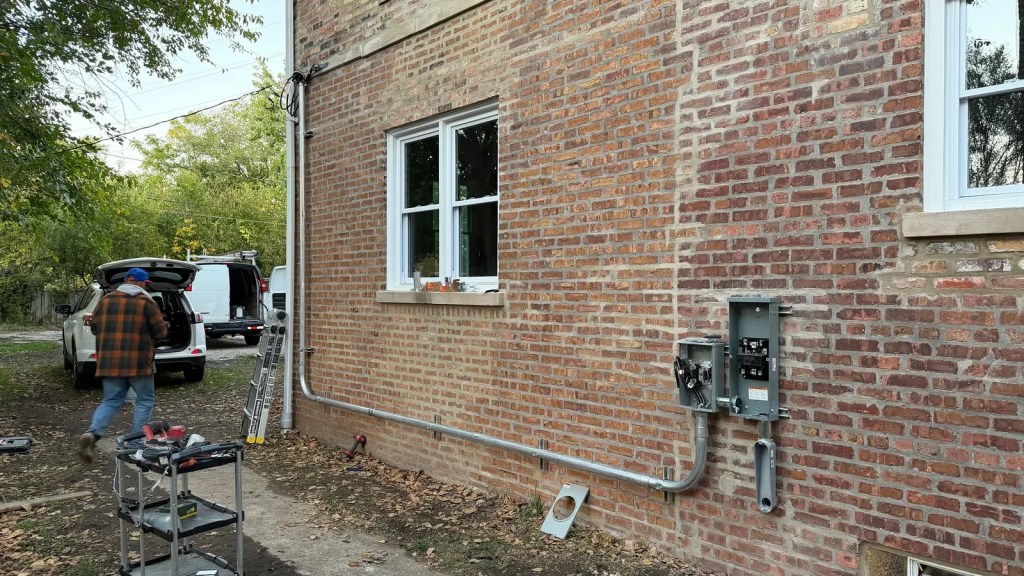
Pump station electrical
Street and site electrical is a different trade from building electrical. Quik Wire Electric handles pump station electrical across Des Plaines and 24 Illinois counties. Licensed, insured, permitted where it needs to be.
- Licensed
Illinois electrical contractor license. The work passes inspection.
- Insured
Full coverage on every job, residential through municipal.
- 24/7
No power, burning smell, breaker that will not hold. We answer.
- Permits pulled
Filed with the village when required, then inspected and signed off.
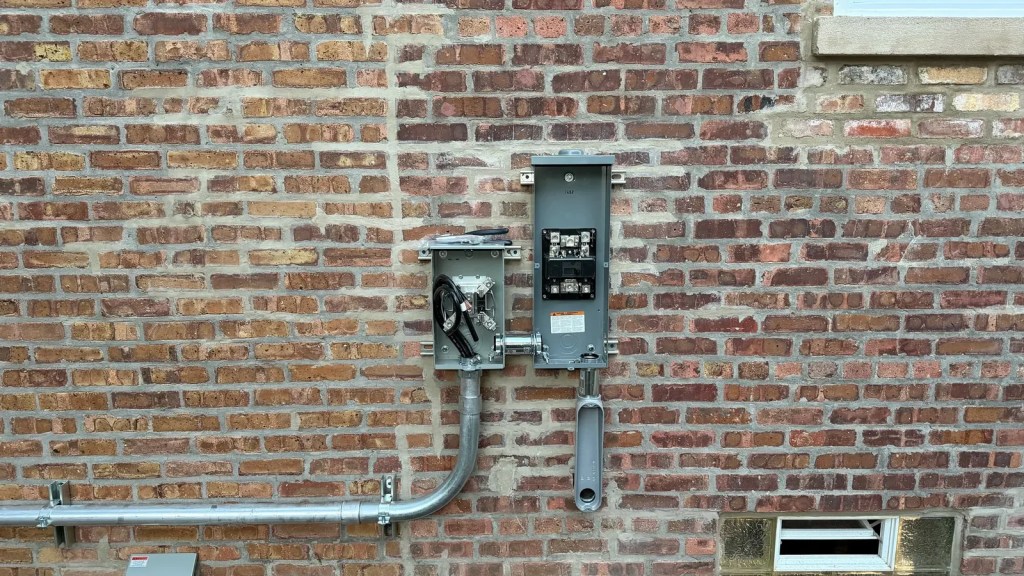
What pump station electrical involves
Street and site electrical is a different trade from building electrical. The work starts with finding out what is actually there. With pump station electrical, that means looking at the existing wiring, the panel capacity and whatever the last person left behind.
Plenty of calls end with a smaller bill than people braced for. A tripping breaker is often a single bad device, and a dead outlet is often a loose wire two boxes away.
Where this comes up
Street lighting, traffic signals, pump stations and underground distribution. Most of these calls come from Des Plaines and the surrounding suburbs, but we take them anywhere in our service area.
Older Illinois buildings rarely match the drawings, if there are drawings at all. Circuits wander between floors, junction boxes hide above ceilings, and a single breaker might feed a bedroom and half the kitchen. Tracing it properly is the first hour of a lot of jobs.
How we do it
We show up when we said we would and explain the work before we start. Permits get pulled where they are required, and the job is not finished until it passes inspection.
Why this is worth doing properly
For a business, a shortcut in the electrical shows up as downtime. A circuit that trips during the busiest hour or a cooler that loses power overnight can cost more than the original job did. Getting the load calculation right and every connection tight at install is what prevents that, and it is the part of the work customers never see.
The cost of doing it right the first time is almost always lower than the cost of doing it twice. We would rather tell you the job is bigger than you hoped than come back in two years.
Scheduling and how long it takes
Once a job is booked, the work itself usually goes quickly. The waiting, when there is any, comes from permit offices and ComEd scheduling, which is why a service change takes longer to start than a repair does.
Permit turnaround is not the same in every village. Some issue one quickly and others take longer, especially for anything bigger than a circuit. We know to ask, and we factor that wait into the date we give you.
Code, permits and inspection
Most permitted jobs have two inspections. The rough-in is checked with the walls open, before insulation and drywall. The final happens once devices are in and the power is on. Missing the rough-in means opening finished walls later, so we schedule around it from the start.
We deal with whichever jurisdiction the job sits in. We pull the permit, we schedule the inspection, and we are there when the inspector walks it. You get the paperwork at the end, which matters when you sell the building or when an insurer asks.
Grounding and bonding
Grounding is the part nobody sees and the part that decides whether a fault clears safely. The ground path has to be continuous and low-impedance from every device back to the service, and the neutral and ground can only be bonded together in one place.
A neutral bonded to ground in a subpanel is one of the most common defects we find. It works right up until it does not, and then it puts current on metal that people touch.
The warning signs people ignore
If you have started unplugging one thing to run another, the circuit is telling you it is overloaded. Same if a breaker trips in one season and never in the other. People work around these for years. We would rather see them early, while the fix is still a small one.
A problem that fixes itself has not gone away. It has only stopped showing up for now, and the cause is still sitting behind the plate.
We tell you what is wrong before we tell you what it costs.
How the job runs
- Step 1
Call
You describe the symptom to an electrician who has seen it before. Urgent or not, you know before you hang up.
- Step 2
Diagnose
We find the actual fault. Not a guess, and not a rewire you did not need.
- Step 3
Price
You get the number before the work starts, in writing.
- Step 4
Permit
Where the village requires one, we pull it. That is on us, not on you.
- Step 5
Install
Licensed and insured, to code, cleaned up behind us.
- Step 6
Inspect
We meet the inspector and we sign off. You get the documentation.
Other infrastructure work
Related services we handle with the same crew.
- Municipal street lightingStreet lighting, traffic signals, pump stations and underground distribution.
- Traffic signal electricalStreet lighting, traffic signals, pump stations and underground distribution.
- Traffic signal infrastructureStreet lighting, traffic signals, pump stations and underground distribution.
- Pedestrian crossing signalsStreet lighting, traffic signals, pump stations and underground distribution.
- Municipal parking lot lightingStreet lighting, traffic signals, pump stations and underground distribution.
- Park lightingStreet lighting, traffic signals, pump stations and underground distribution.
- Municipal athletic field lightingStreet lighting, traffic signals, pump stations and underground distribution.
- Municipal parking facilitiesStreet lighting, traffic signals, pump stations and underground distribution.
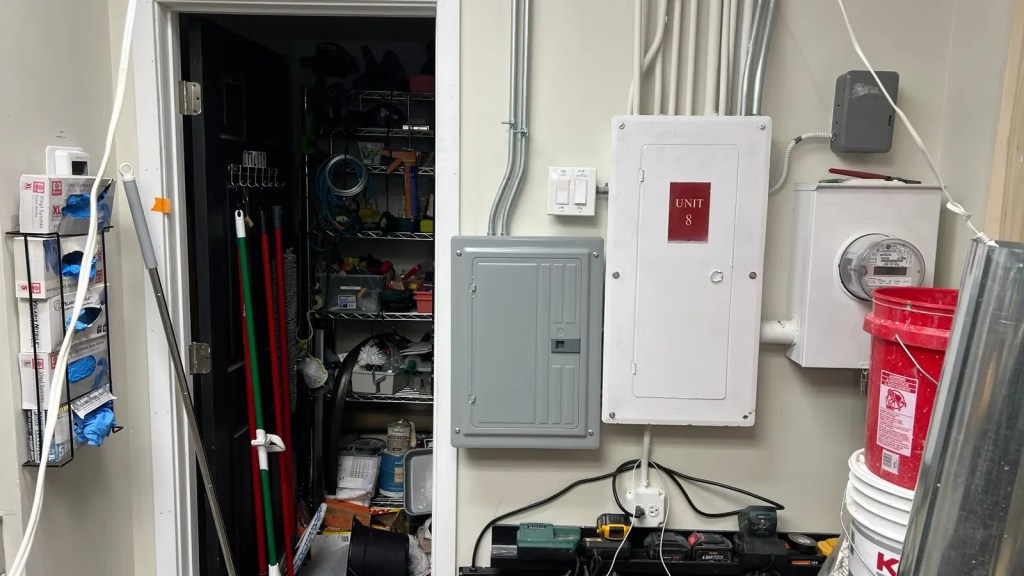
Pump station electrical, done on the record
The paperwork is part of the work. Permits where required, an inspection at the end, and a licensed, insured electrician in between.
Pump station electrical questions
Do you handle pump station electrical in Des Plaines?
Yes. Pump station electrical is work we do regularly out of our Des Plaines shop, and we cover 24 counties across Illinois. Call and we will tell you when we can be there.
Is the work permitted and inspected?
Permitted work is inspected work, and we treat both as part of the job. You do not have to call the village yourself. We do, and you get the paperwork afterward.
How soon can you start?
Same day for emergencies, any day of the week. For scheduled jobs a few days is typical, though a permit or a special-order part can push that out.
Are you licensed for this?
Licensed and insured, both. We hold an Illinois electrical contractor license, and it covers every home, business and municipal job we take on.
What does it cost?
It varies too much by job to quote blind. A loose connection and a panel change are different jobs entirely. We come out, find the actual problem, and give you a firm written price for fixing it. No work starts until you agree to it.
Where we work
We cover 527 municipalities across 24 counties.
- Des Plaines, ILPump station electrical in Des Plaines and the rest of Cook County.
- Evanston, ILPump station electrical in Evanston and the rest of Cook County.
- Glenview, ILPump station electrical in Glenview and the rest of Cook County.
Need pump station electrical?
Call (224) 245-6038. You get an electrician, not a call center.
Every photo in our gallery is a job our own crew did. Send us the address and what is going on.