
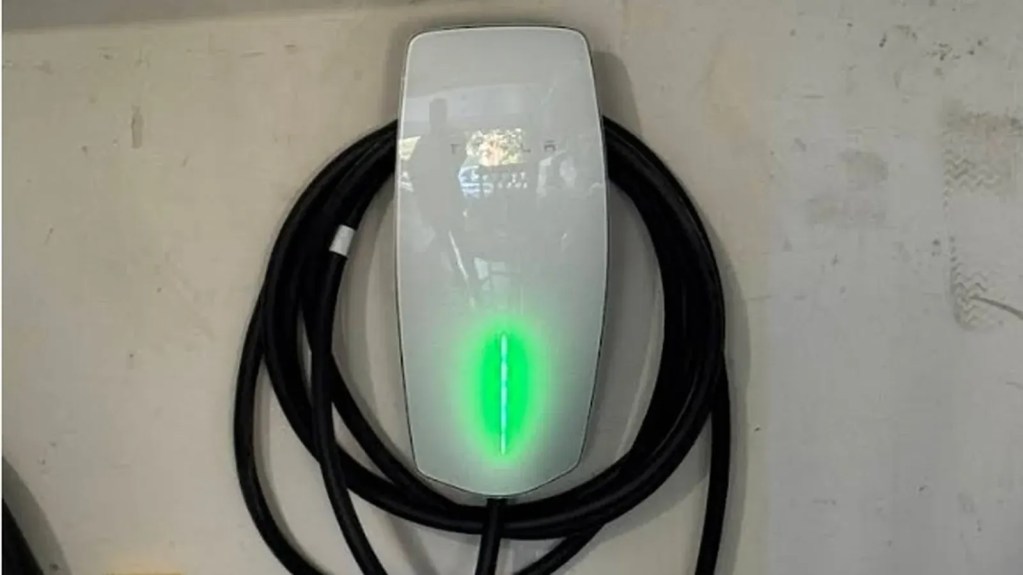
Belvidere EV charger installation
Almost every charger job starts with arithmetic rather than a drill. We work out what your service can actually carry, size the circuit to the charger instead of to whatever breaker is spare, and put the work on the record with the city.
- Licensed
Illinois electrical contractor license. The work passes inspection.
- Insured
Full coverage on every job, residential through municipal.
- 24/7
No power, burning smell, breaker that will not hold. We answer.
- Permits pulled
Required permits get filed by us. We are there when the inspector comes.
The calculation comes before the charger
A home charger is a continuous load, which means your service either has room for it or does not. So we add it up first: floor area, heating and cooling, range, dryer, water heater, well pump if there is one, then the charger on top. The number that falls out defines the whole job, and it is why nobody should quote this over the phone. Two houses that look identical can land on opposite sides of the line because one has a gas range.
What a Level 2 circuit really is
Two hundred forty volts on a dedicated circuit with nothing else sharing it. The breaker and the conductors are sized to the charger's continuous rating plus the headroom the code requires, so a charger has to sit on a circuit rated meaningfully above what it draws. None of that bends to fit a spare space in your panel.
Reading the panel honestly
Two empty slots is not capacity. Capacity is what the service can carry; the panel is only where the breakers live. Plenty of houses have room in the box and nothing left in the service, and the reverse turns up too.
When a subpanel answers it
If the service has capacity and the panel is just physically full, a subpanel is the clean fix and it is short work. It also leaves room for the next thing, usually a second charger or a shop circuit.
If the calculation says the service is short, a subpanel fixes nothing. That is a service change, and a service change does not run on our calendar alone: ComEd has to drop and reconnect the service and the city has to inspect it.
Hardwired or on a receptacle
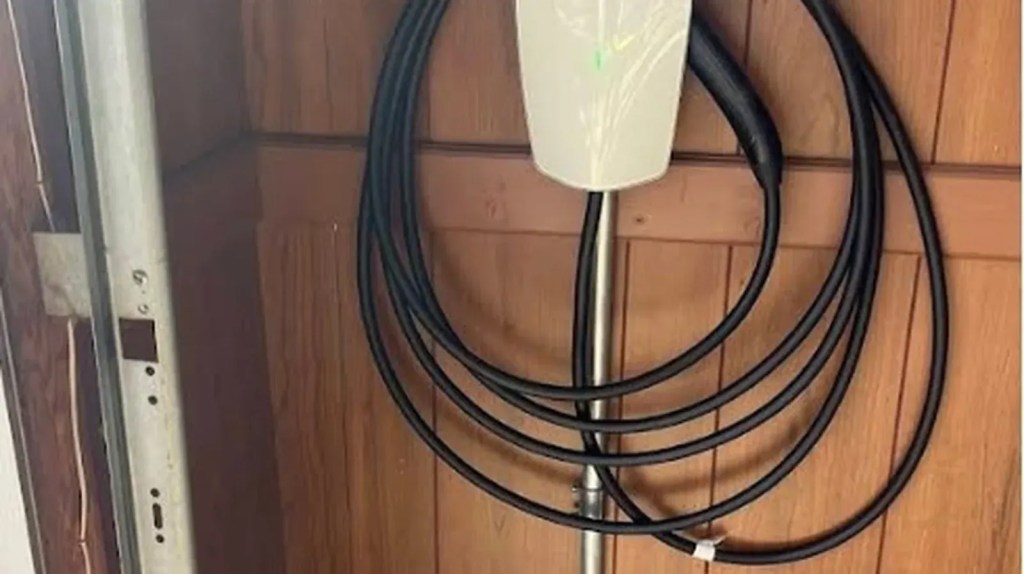
Hardwired is cleaner and it is what we suggest for a unit that is staying where it is put. No plug, no receptacle to heat up, cable straight into the charger. In an unheated garage or outdoors it is also the more durable of the two.
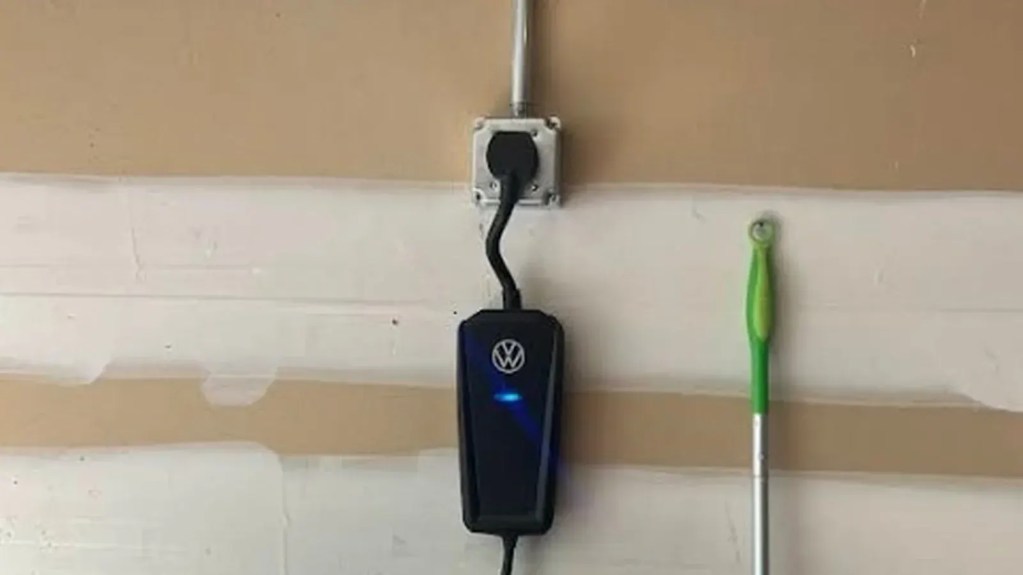
A receptacle earns its place if you expect to swap units, or you want to take the charger with you when you move. The trade is a connection that can work loose, and on a circuit running near its rating for six hours a night that is the connection that warms up.
Getting power out to a detached garage
An attached garage is usually a short run through the adjoining wall and the labor is small. Detached is a different animal, because a feeder has to physically get out there.
Out in the newer subdivisions that feeder normally goes underground, and underground is a dig: locates called before a shovel moves, burial depth and conduit that satisfy the inspector, and your lawn open for a day. The electrical half is the easy half.
Charging through a Boone County winter
Cold costs you range and it slows the charge. A pack below freezing accepts power more slowly than a warm one, and some of what you draw overnight warms the battery instead of filling it. That is chemistry, not a fault to chase, which is why people who charged happily in October call in January.
What helps: a circuit sized correctly rather than barely, a unit mounted where you can work the connector with gloves on, and preconditioning the car on shore power rather than off the battery. An undersized circuit is at its worst in the cold.
Where the unit lands on the wall
Mounting height, which side of the car the port sits on, how far the cable genuinely reaches, and whether you still want to walk past the car with the cable hung up. We settle that standing in the garage with you, because it is the part you live with daily and it costs nothing to get right before the cable is run. Outdoors, the unit and its enclosure have to be rated for it, with a disconnect where one is called for.
The permit and what it leaves behind
A new 240 volt circuit is permitted work. We file it, meet the inspector and hand you the paperwork at the end. People skip this on a charger more than on any other job, usually because the unit arrived in a box with a plug on it and felt like an appliance.
Planning for the second car
Most households that install one charger end up with a second car inside a few years, and the cheap moment to allow for that is while the wall is already open. A larger feeder out to the garage, or space left in a subpanel, is a small addition now and a whole second job later.
Sizing a charger circuit to the breaker you happen to have left over is how a garage gets warm.
Belvidere, IL
Belvidere and the Boone County towns next to it. The newer subdivisions out this way are where most of the charger work sits.
Boone County
7 municipalities covered.
All of Boone CountyEverything else in Belvidere
The work either side of EV charger installation: panels, lighting, generators, and the calls that cannot wait.
Belvidere electricians
How we run EV charger installation at a Belvidere address
- Step 1
Calculate
We total the existing load and add the charger to it. That tells us whether the service can carry this as it stands.
- Step 2
Confirm
Charger model, amperage, mounting spot and cable reach get settled in the garage with you, not assumed from the box.
- Step 3
File
Where the city requires a permit for the new circuit we file it and handle the scheduling. That is our paperwork, not yours.
- Step 4
Mount
Unit on the wall at a height that works, dedicated circuit run on its own breaker, cable protected where it needs to be.
- Step 5
Energize
Breaker in, terminations torqued to spec, and the charger brought up and watched through a full session rather than a test blink.
- Step 6
Verify
We charge the car in front of you, confirm it pulls what it should, and leave the circuit labeled in the panel.
The arithmetic before the drill
We would rather spend an hour on your existing load than install a charger your service cannot feed. If the answer is that the panel or the service has to change first, you hear it at the quote, not after the wall is open.
Residential EV charger installation in Belvidere: questions we get
Can my existing panel handle an EV charger?
That is what the load calculation answers, and open slots in the panel are not the same thing as capacity in the service. We total what the house already draws, add the charger as a continuous load, and read the main. Some houses take it as they stand, some need the panel reworked, and some need a larger service first.
Is a Level 2 charger worth it over a regular outlet?
For almost anyone who drives the car daily, yes. A standard receptacle adds range slowly enough that a near-empty battery takes the better part of a weekend, while a properly sized 240 volt circuit does it overnight. The circuit is the part that has to be right, and it is sized above the charger's draw rather than to it.
Should the charger be hardwired or plugged in?
Hardwired for a unit that is staying put, especially in an unheated garage or outdoors, because there is no plug connection to loosen or heat up. A receptacle makes sense if you plan to swap units or take the charger with you. We will tell you which one fits how you actually use the garage.
Can you put a charger in a detached garage?
Yes. The work is a feeder out to the garage, either overhead or underground, and underground is standard in the newer subdivisions around Belvidere. That part involves locates before digging, burial depth and conduit the inspector will accept, and a day with the yard open. The electrical work is the straightforward half.
Does a home charger need a permit and an inspection?
A new 240 volt circuit is permitted work, so yes. We file with the city, meet the inspector, and give you the documentation when the job closes. People skip this step more often on chargers than on anything else, and it is the one circuit in the house that runs at high current for hours while everybody is asleep.
The rest of what we do in Belvidere
Same crew, same license, same Belvidere addresses.
- Residential electrical panel upgradesThe charger is usually what exposes how much service the house actually has.
- Circuit breaker replacementA charger circuit is the last breaker anybody should size by guesswork.
- GFCI installationBoth come down to a circuit doing one job and sharing with nothing else.
- Knob-and-tube wiring replacementOld wiring decides whether the house can carry a charger at all.
- Residential EV charger installation everywhere we workThe same EV charger installation across Des Plaines and 24 Illinois counties.
Charger still in the box in your garage?
Call (224) 245-6038 and we will start with what your service can actually carry.
Want to see EV charger installation we have already done? There are photographs in the gallery, or send the details of your Belvidere job.