
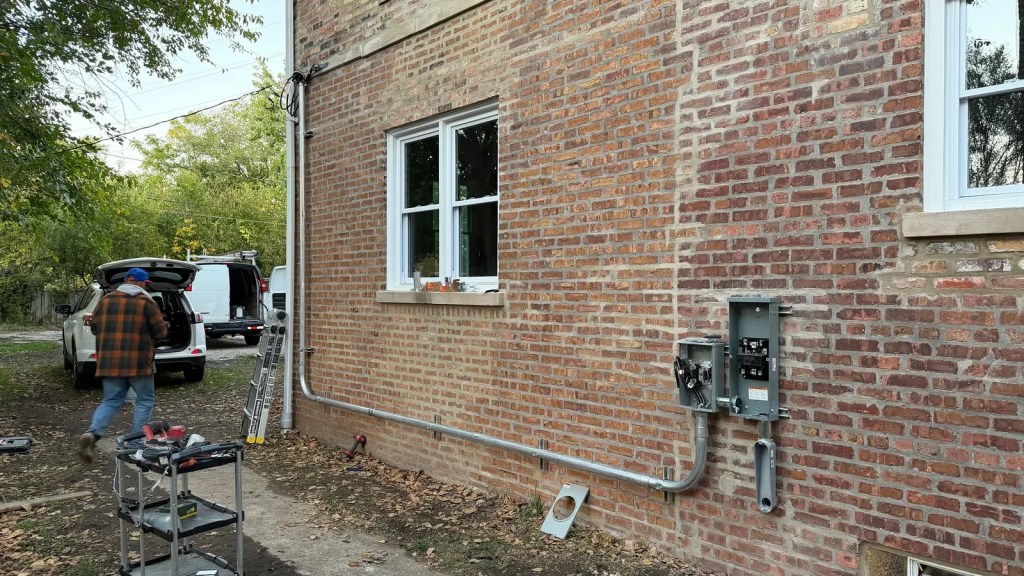
Municipal generators
A generator is only worth what it does in the first ten seconds of an outage. Quik Wire Electric handles municipal generators across Des Plaines and 24 Illinois counties. Licensed, insured, permitted where it needs to be.
- Licensed
Illinois electrical contractor license. The work passes inspection.
- Insured
Full coverage on every job, residential through municipal.
- 24/7
No power, burning smell, breaker that will not hold. We answer.
- Permits pulled
Where the village requires one we file it and meet the inspector.
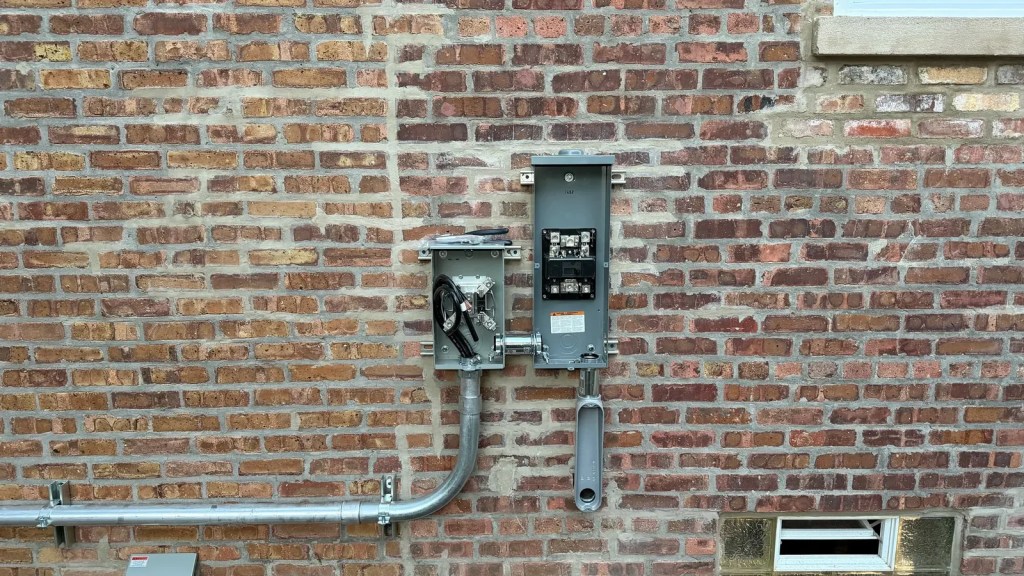
What municipal generators involves
A generator is only worth what it does in the first ten seconds of an outage. The work starts with finding out what is actually there. With municipal generators, that means looking at the existing wiring, the panel capacity and whatever the last person left behind.
Where repair makes more sense than replacement, we repair. Swapping out equipment that still has years left in it is good business for a contractor and a bad deal for you.
Where this comes up
Standby generators, automatic transfer switches and emergency power systems. Most of these calls come from Des Plaines and the surrounding suburbs, but we take them anywhere in our service area.
Insulation is the quiet problem. Cloth-wrapped conductors from decades ago go brittle inside the box, and they crack the moment somebody moves them to swap a switch. A small job becomes a careful one, so we check before we promise a time.
How we do it
The electrician who quotes the job comes from the same crew that does it. We work to the current code, test every circuit before we leave and label the panel so the next person can read it.
Why this is worth doing properly
Power that seems to work is a low bar. A circuit can carry current for years while a connection inside it slowly overheats, and nothing in the room gives it away. The real test is whether the work meets code and was installed by someone willing to put a license behind it. That is the standard we hold every job to, small ones included.
The cost of doing it right the first time is almost always lower than the cost of doing it twice. We would rather tell you the job is bigger than you hoped than come back in two years.
Scheduling and how long it takes
Same day for anything unsafe, like no power or a burning smell. A service upgrade starts as soon as the permit and ComEd allow, and most other work fits in within a few days.
Parts can set the pace. Common breakers and devices are on the truck. Larger gear, like a specific panel or a transfer switch, may have to be ordered, and we will tell you that at the quote instead of on the day.
What the permit actually buys you
A permit puts the work on the public record for the address. When the building changes hands, that record is evidence the electrical was done and checked. Without it, a buyer's inspector treats everything they find as suspect.
It also means the work was sized and installed to the code edition in force, not to whatever was normal when the building went up.
Materials and why they matter
Devices are not all the same. A fifty-cent backstabbed outlet holds the conductor with a spring clip; a commercial-grade one clamps it under a screw plate. The second kind is a couple of dollars more and it is the reason the connection is still tight in fifteen years.
We use commercial-grade devices as standard. It is a small share of the job cost and it is the part most likely to fail if you go cheap on it.
When to stop and call
Stop using a circuit and call if you see scorching around an outlet or switch, smell hot plastic, hear buzzing from a panel or a device, or feel warmth on a faceplate or breaker.
Do not keep resetting a breaker that will not hold. It is doing its job. Something downstream is drawing more than the circuit is rated for, or there is a fault, and repeated resets remove the one protection that is working.
The transfer switch is the system
People buy a generator and think of the engine as the product. The part that decides whether backup power actually works is the transfer switch, because it is what keeps generator power from backfeeding onto the utility line where it can kill a lineman.
Automatic switches sense the outage and start the unit without anybody being home. Manual switches cost less and need somebody present. Which one is right depends on what you are protecting.
We tell you what is wrong before we tell you what it costs.
How the job runs
- Step 1
Call
You talk to an electrician. Tell us what is happening and we tell you whether it is urgent.
- Step 2
Diagnose
We find the actual fault. Not a guess, and not a rewire you did not need.
- Step 3
Price
You get the number before the work starts, in writing.
- Step 4
Permit
Where the village requires one, we pull it. That is on us, not on you.
- Step 5
Install
Licensed and insured, to code, cleaned up behind us.
- Step 6
Inspect
We meet the inspector and we sign off. You get the documentation.
Other generators work
Related services we handle with the same crew.
- Standby generatorsStandby generators, automatic transfer switches and emergency power systems.
- Commercial generatorsStandby generators, automatic transfer switches and emergency power systems.
- Residential generatorsStandby generators, automatic transfer switches and emergency power systems.
- Government generator systemsStandby generators, automatic transfer switches and emergency power systems.
- Emergency generatorsStandby generators, automatic transfer switches and emergency power systems.
- Generator installationStandby generators, automatic transfer switches and emergency power systems.
- Generator wiringStandby generators, automatic transfer switches and emergency power systems.
- Generator maintenanceStandby generators, automatic transfer switches and emergency power systems.
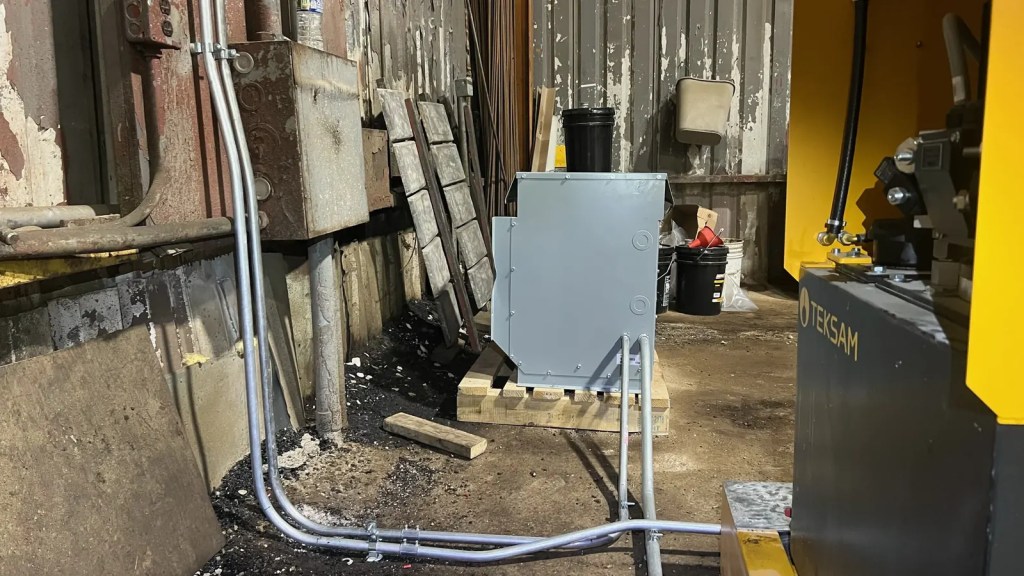
Municipal generators, done on the record
Every job goes on the record. A permit filed where the village asks for one, an inspection passed, and a licensed, insured electrician doing the work.
Municipal generators questions
Do you handle municipal generators in Des Plaines?
Yes. Municipal generators is work we do regularly out of our Des Plaines shop, and we cover 24 counties across Illinois. Call and we will tell you when we can be there.
Is the work permitted and inspected?
Every job that needs a permit gets one. We coordinate the inspection date, walk the inspector through the work, and you receive the paperwork when it closes.
How soon can you start?
Sooner than most people expect. A safety issue gets someone out the same day. Planned work typically starts in a few days, depending on parts and any permit.
Are you licensed for this?
Yes. Quik Wire Electric holds an Illinois electrical contractor license and carries insurance. Every electrician on the job works under that license.
What does it cost?
Sometimes less than people expect, because if a part does not need replacing we say so. Either way you get a written price after we have seen the job, and it holds unless the scope changes.
Where we work
We cover 527 municipalities across 24 counties.
- Des Plaines, ILMunicipal generators in Des Plaines and the rest of Cook County.
- Park Ridge, ILMunicipal generators in Park Ridge and the rest of Cook County.
- Mount Prospect, ILMunicipal generators in Mount Prospect and the rest of Cook County.
Need municipal generators?
Call (224) 245-6038. You get an electrician, not a call center.
Rather judge us by the work? Our gallery shows real jobs. If something is wrong right now, reach an electrician here.