
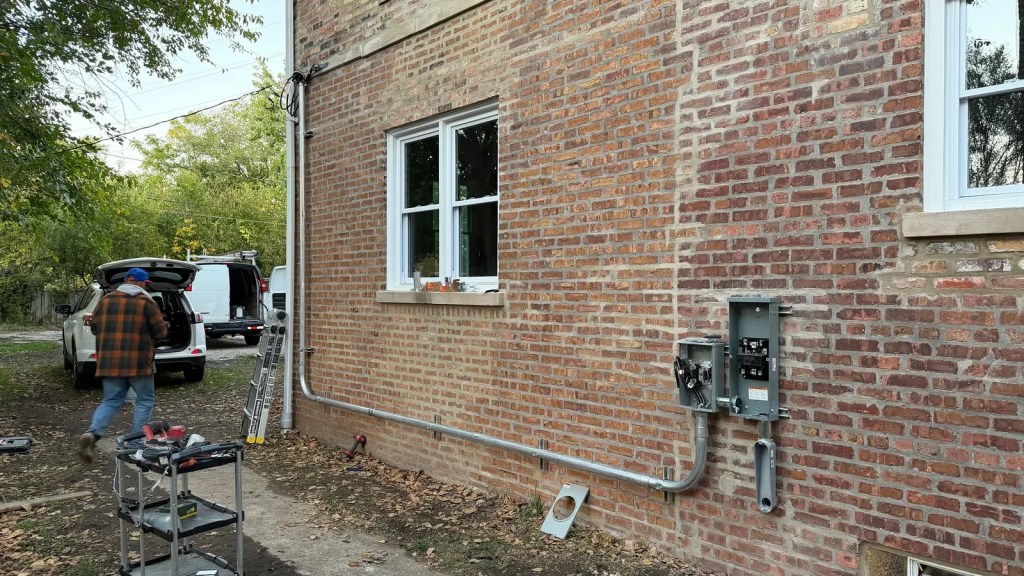
Bonding
Service work means coordinating with the utility, not just with the customer. Quik Wire Electric handles bonding across Des Plaines and 24 Illinois counties. Licensed, insured, permitted where it needs to be.
- Licensed
Illinois electrical contractor license. The work passes inspection.
- Insured
Full coverage on every job, residential through municipal.
- 24/7
No power, burning smell, breaker that will not hold. We answer.
- Permits pulled
Where the village requires one we file it and meet the inspector.

What bonding involves
Service work means coordinating with the utility, not just with the customer. The work starts with finding out what is actually there. With bonding, that means looking at the existing wiring, the panel capacity and whatever the last person left behind.
It starts with a look at the panel and the circuits involved. From there we tell you what has to be done, what can wait and what was never a problem at all.
Where this comes up
Services, switchgear, transformers and the distribution behind the meter. Most of these calls come from Des Plaines and the surrounding suburbs, but we take them anywhere in our service area.
Insulation is the quiet problem. Cloth-wrapped conductors from decades ago go brittle inside the box, and they crack the moment somebody moves them to swap a switch. A small job becomes a careful one, so we check before we promise a time.
How we do it
Straight to the point: we find the problem, fix it to code and leave the space as clean as we found it. Anything that needs a permit gets one, and gets inspected.
What we see go wrong
Most of the bad work we find was not done by an electrician. It was a handyman, a previous owner or somebody who watched a video. Backstabbed outlets, undersized conductors, missing grounds, neutrals and grounds bonded in a subpanel, junctions buried inside a wall with no box.
None of that is visible from the living room. It surfaces during a remodel, a home inspection, or the day a breaker stops holding.
What happens when we are done
We clean up the work area and leave the place the way we found it, minus the problem. Where a permit was pulled, the inspection closes the job and you get the paperwork for your records.
Where a permit was pulled you get the closed inspection. Where documentation exists, you get it.
Code, permits and inspection
Generators and transfer switches draw extra attention from inspectors, because a bad install can push power back into the utility lines. Expect a permit and an inspection on those even in places that are relaxed about smaller work, and expect us to handle both.
We deal with whichever jurisdiction the job sits in. We pull the permit, we schedule the inspection, and we are there when the inspector walks it. You get the paperwork at the end, which matters when you sell the building or when an insurer asks.
Materials and why they matter
Devices are not all the same. A fifty-cent backstabbed outlet holds the conductor with a spring clip; a commercial-grade one clamps it under a screw plate. The second kind is a couple of dollars more and it is the reason the connection is still tight in fifteen years.
We use commercial-grade devices as standard. It is a small share of the job cost and it is the part most likely to fail if you go cheap on it.
When to stop and call
Turn the circuit off and pick up the phone if a switch is hot, a receptacle has discolored, or there is a buzz you can trace to a device or the panel. Do not keep resetting and hoping.
Smoke from an outlet, a fixture or the panel is not a wait-and-see problem. Kill power at the main if you can reach it safely, get out, and call the fire department first. Call us after, so the cause gets found and fixed.
Service size is a ceiling on everything
The service is the limit every other circuit lives under. A 100-amp service was generous when houses had one air conditioner and a gas range. Add electric cooking, a heat pump, a car charger and a finished basement and it stops being enough.
Upgrading means coordinating with ComEd, replacing the meter socket and mast, and sizing the new panel for what the building will need in ten years rather than exactly what it needs today.
We tell you what is wrong before we tell you what it costs.
How the job runs
- Step 1
Call
Call and talk it through with a licensed electrician. We will be honest about how serious it sounds.
- Step 2
Diagnose
We find the actual fault. Not a guess, and not a rewire you did not need.
- Step 3
Price
You get the number before the work starts, in writing.
- Step 4
Permit
Where the village requires one, we pull it. That is on us, not on you.
- Step 5
Install
Licensed and insured, to code, cleaned up behind us.
- Step 6
Inspect
We meet the inspector and we sign off. You get the documentation.
Other power work
Related services we handle with the same crew.
- Electrical service installationServices, switchgear, transformers and the distribution behind the meter.
- Service electrical service upgradesServices, switchgear, transformers and the distribution behind the meter.
- Electrical service replacementServices, switchgear, transformers and the distribution behind the meter.
- Electrical service repairsServices, switchgear, transformers and the distribution behind the meter.
- Utility service connectionsServices, switchgear, transformers and the distribution behind the meter.
- Electrical meter installationServices, switchgear, transformers and the distribution behind the meter.
- Main disconnectsServices, switchgear, transformers and the distribution behind the meter.
- Main service panelsServices, switchgear, transformers and the distribution behind the meter.
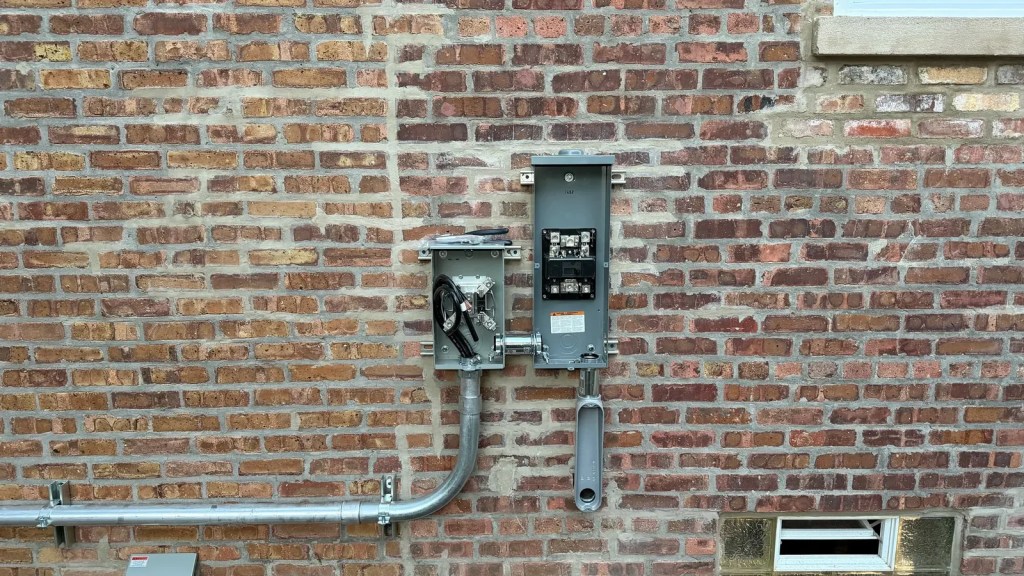
Bonding, done on the record
Every job goes on the record. A permit filed where the village asks for one, an inspection passed, and a licensed, insured electrician doing the work.
Bonding questions
Do you handle bonding in Des Plaines?
Yes. Bonding is work we do regularly out of our Des Plaines shop, and we cover 24 counties across Illinois. Call and we will tell you when we can be there.
Is the work permitted and inspected?
Every job that needs a permit gets one. We coordinate the inspection date, walk the inspector through the work, and you receive the paperwork when it closes.
How soon can you start?
Sooner than most people expect. A safety issue gets someone out the same day. Planned work typically starts in a few days, depending on parts and any permit.
Are you licensed for this?
Yes, with an Illinois electrical contractor license and insurance. That covers every job we take, from a single outlet to municipal work.
What does it cost?
It varies too much by job to quote blind. A loose connection and a panel change are different jobs entirely. We come out, find the actual problem, and give you a firm written price for fixing it. No work starts until you agree to it.
Where we work
We cover 527 municipalities across 24 counties.
- Des Plaines, ILBonding in Des Plaines and the rest of Cook County.
- Hoffman Estates, ILBonding in Hoffman Estates and the rest of Cook County.
- Schaumburg, ILBonding in Schaumburg and the rest of Cook County.
Need bonding?
Call (224) 245-6038. You get an electrician, not a call center.
The gallery has panels, conduit runs and chargers we installed. For your own job, use the contact page.