
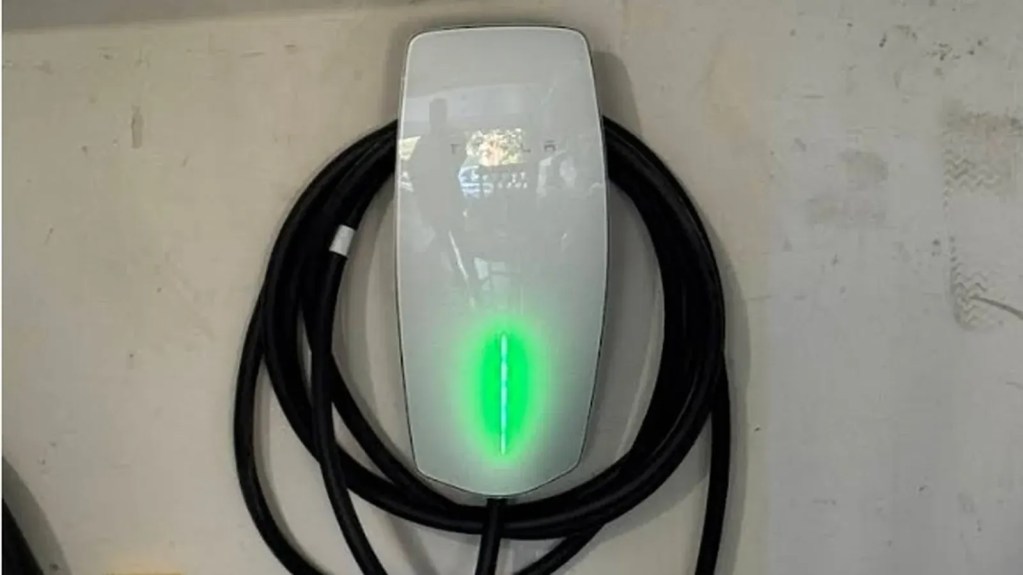
People call about a charger and expect a conversation about brands. The brand is the least interesting part. What decides whether this is a half-day job or a much larger one is the panel it connects to.
Continuous load changes the math
A car charger runs at close to full current for hours, which code treats as a continuous load. The circuit has to be sized at 125 percent of the charger rating: a 48-amp charger needs a 60-amp circuit. That capacity has to exist alongside everything else in the house.
We run the calculation first. Sometimes the panel takes it as it stands. Sometimes a load management device lets you add the charger without touching the service. Sometimes the service genuinely needs upgrading first, and we will say so rather than installing something that trips every evening.
The install itself
Most residential installs take three to five hours once the parts are on site: a dedicated circuit from the panel, the charger mounted and connected, and everything tested before we leave. Distance from the panel to the parking spot is the other big variable, because that is conduit and conductor.
Check whether your unit needs a hardwired connection or a receptacle, and whether it is listed for outdoors if it is going on an exterior wall. Buying first and asking second is how people end up with a unit that does not suit the install.
Commercial and fleet
Business, school and municipal sites are a different scale of job: load studies, utility coordination, trenching, and often DC fast charging rather than Level 2. The principle is the same, the paperwork is heavier.
What drives the price
Three things, in order. Distance from the panel to where the car parks, because that is conduit and conductor and labor. Panel capacity, because a load management device or a service upgrade changes the job entirely. And the route: a straight run through an unfinished basement is a different afternoon from fishing a finished wall or trenching to a detached garage.
- Is it hardwired or does it plug into a receptacle? That changes the circuit.
- Is it listed for outdoor use if it is going on an exterior wall?
- What amperage do you actually need? A 48-amp charger is not much faster overnight than a 32-amp one.
- Does it support load management? That can save you a service upgrade.
- Is there a utility rebate in your area, and does it require a specific model or installer?
Most EV installs are a load calculation with a charger at the end.
Commercial and fleet charging
Business, school and municipal sites are a different scale: load studies, utility coordination, trenching, site preparation, and often DC fast charging rather than Level 2. Illinois has active programs around this and government projects can carry prevailing-wage and apprenticeship requirements, which shapes the bid as much as the electrical does.
Questions we get about this
How long does the install take?
Most residential Level 2 installs are three to five hours once the parts are on site. If the panel needs an upgrade first, that is a separate, longer job and we tell you upfront.
Do I need a 60-amp circuit?
Only for a 48-amp charger. Code requires a continuous load sized at 125 percent, so the circuit is always larger than the charger rating. Many households are well served by a 32-amp unit on a 40-amp circuit.
What if my panel is full?
Three options, cheapest first: a load management device that lets the charger share capacity, a subpanel, or a service upgrade. We run the numbers before recommending any of them.
Can you install for a business or fleet?
Yes. Commercial and municipal work is its own scale: load studies, utility coordination, trenching, commissioning, and often DC fast charging rather than Level 2.
How we price and schedule this
We look before we quote. That means somebody comes out, opens the panel, and finds out what is actually behind the wall. Quoting a job like this over the phone produces a number that changes, and a number that changes is worse than no number at all.
What you get is written, itemized against a defined scope. If we open something up and the scope genuinely changes, we stop and tell you before carrying on. Emergencies get same-day attention; scheduled work usually starts within a few days, though anything needing a permit or a utility disconnect runs on the village calendar and ComEd’s as well as ours. We will tell you at the quote which parts we control and which we do not.
What done looks like
The work gets tested, the circuits get labeled properly in the panel, and the site gets cleaned up behind us. Labeled panels matter more than people think, because the next person working on that system is reading your labels to decide what is safe to touch. Where a permit was pulled you get the closed inspection, and where documentation exists, you get it.
Why the permit and the inspection matter here
Illinois municipalities adopt the National Electrical Code on their own schedule, so the rules in one village are not always the rules in the next one over, and permit thresholds differ too. Some places want a permit for a single new circuit; others only for a service change or a panel replacement. We deal with whichever jurisdiction the job sits in rather than guessing, which is part of what you are hiring.
The inspection is not a formality to get through. It is an independent check that what went behind the drywall matches what was supposed to, carried out by somebody with no stake in the invoice. It also puts the work on the public record for the address, which is what a buyer, a buyer’s inspector or an insurer will eventually ask about.
Who does the work
Quik Wire Electric is a licensed Illinois electrical contractor and we carry insurance on every job. Where the village requires a permit we pull it and we meet the inspector, so the work goes on the public record for the address rather than living only in your memory.
The same licensed electricians turn up whether the job is one dead outlet in a bungalow or switchgear in a village facility. We do not run a separate B-team for small work and we do not subcontract the parts nobody wants. You get told who is coming and roughly when, and if we are running late you get a call.
We work out of Des Plaines and cover 24 Illinois counties, from Cook and Lake through DuPage, Kane, McHenry and Will and out to Winnebago, LaSalle and Champaign. The full service area is here if you want to check whether your address is on it.
Charging at a Belvidere address? our Belvidere EV charger page covers panel capacity, the garage run and charging through a northern Illinois winter.
Thinking about a charger at home?
The first question is always what your panel can carry. We work that out before anything gets ordered.
Talk to an electrician